Caucasus
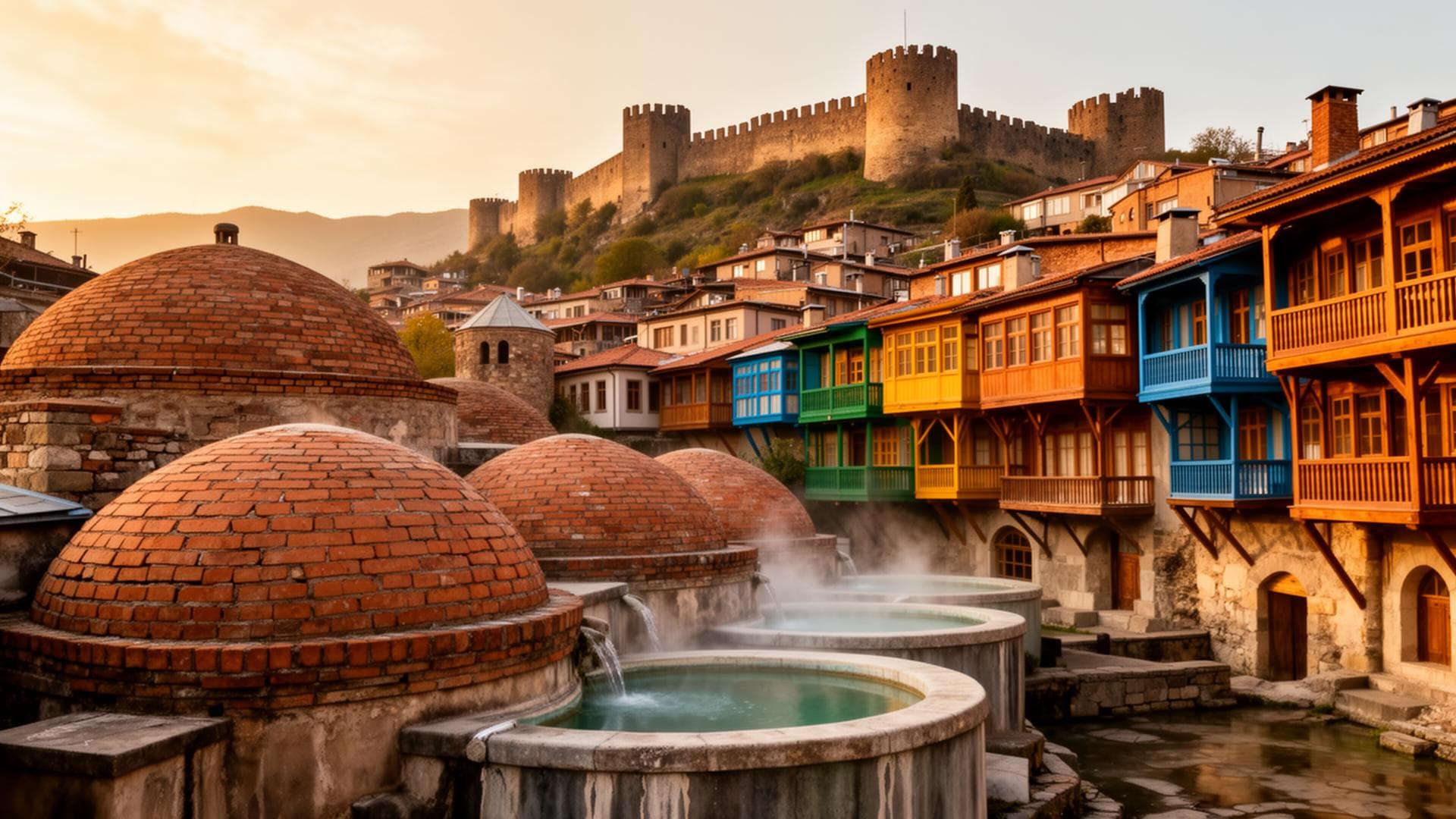
Tbilisi is a city that wears its layers openly. Persian bathhouses, Orthodox churches, Soviet courtyards, art nouveau facades, and brutalist towers all jostling for space in a narrow river valley. The Georgian capital was literally founded around its hot springs (the name comes from "tbili," meaning warm), and that geothermal heart still pulses under the old town in the form of the famous sulfur baths. Add some of the best food and wine in the region, a generous, hospitable culture, and a setting wrapped in green hills crowned by the Narikala Fortress, and you have one of the most quietly addictive cities in Europe.
Things to Do
Soak in the Abanotubani sulfur baths. This is the experience that defines Tbilisi. The bathhouses sit beneath distinctive brick beehive domes in the old town, fed by naturally hot, sulfur-rich springs that bubble up from beneath the city at around 38–40°C. The waters have been used since at least the 5th century, when the legend goes that King Vakhtang Gorgasali's falcon fell into a hot spring while hunting, and the city was founded on the spot. The classic move is to book a private room at Chreli Abano (the iconic blue-tiled bathhouse) or Bathhouse No. 5 for an hour, then ask for a traditional kisa scrub from a mekise. It is brutal, exfoliating, and unforgettable. Beyond the baths, walk the cobbled lanes of the old town, ride the cable car up to Narikala Fortress for sweeping city views, cross the glassy Bridge of Peace, explore the Soviet-modernist masterpieces of the Chronicle of Georgia and the Wedding Palace, and lose an evening to a supra (traditional feast) with khachapuri, khinkali, and a flight of qvevri-aged wines.
Best Time to Visit
May, June, September, and October are the sweet spot, warm, sunny, and comfortable for both walking and bath-hopping. July and August are hot (often mid-30s°C) but still very doable. Winter is cold and atmospheric, and frankly the best time of year to be sitting in a sulfur bath.
Where to Stay
The old town (Abanotubani, Sololaki, and around Freedom Square) is the best base, you are within walking distance of the baths, the cable car, and the best restaurants. Vera and Vake are quieter, leafier residential neighborhoods with great cafes if you want a more local feel.
Budget: Fabrika Tbilisi, a former Soviet sewing factory turned design hostel in the creative Marjanishvili district, with a buzzing courtyard.
Mid-range: Communal Hotel Sololaki, restored heritage apartments in a 19th-century building, walking distance to the sulfur baths.
Luxury: Stamba Hotel, a former Soviet printing house converted into one of the most striking design hotels in the Caucasus.
These are affiliate links — booking through them supports Viator Modus at no extra cost to you. Same room, same price, it just helps keep the guides coming.
Getting Around
Central Tbilisi is very walkable, though steep in places. The metro is fast, deep, and incredibly cheap, useful for hopping between districts. The Bolt app is the easiest way to grab a taxi. For trips to Kazbegi, Mtskheta, or Kakheti wine country, marshrutkas (shared minibuses) leave from Didube and Ortachala stations, and private drivers are very affordable.
Hidden Gems
Most tourists go to the famous blue-tiled Chreli Abano, but Bathhouse No. 5 next door is cheaper, less polished, and arguably more authentic. The Open Air Museum of Ethnography on the western edge of the city is a beautifully laid-out hillside park of relocated traditional Georgian houses, and it is almost always empty. And the Dezerter Bazaar near the train station is where locals actually shop. Head there for spices, churchkhela, and the city's best lobiani.