Central Asia
Almaty is the apple city. Every cultivated apple on Earth descends from the wild apple forests in the Tian Shan foothills that wall off this town, and the old Soviet name Alma-Ata translates roughly to "father of apples." It was Kazakhstan's capital until 1997 and is still the country's largest city and cultural heart — a green, tree-lined sprawl of Soviet boulevards pressed right up against a 4,000-meter mountain range, with ski slopes, glacial lakes, and a red-rock canyon all within a day's reach of downtown.
A few days in Almaty beneath the Tian Shan — captured on my trip.
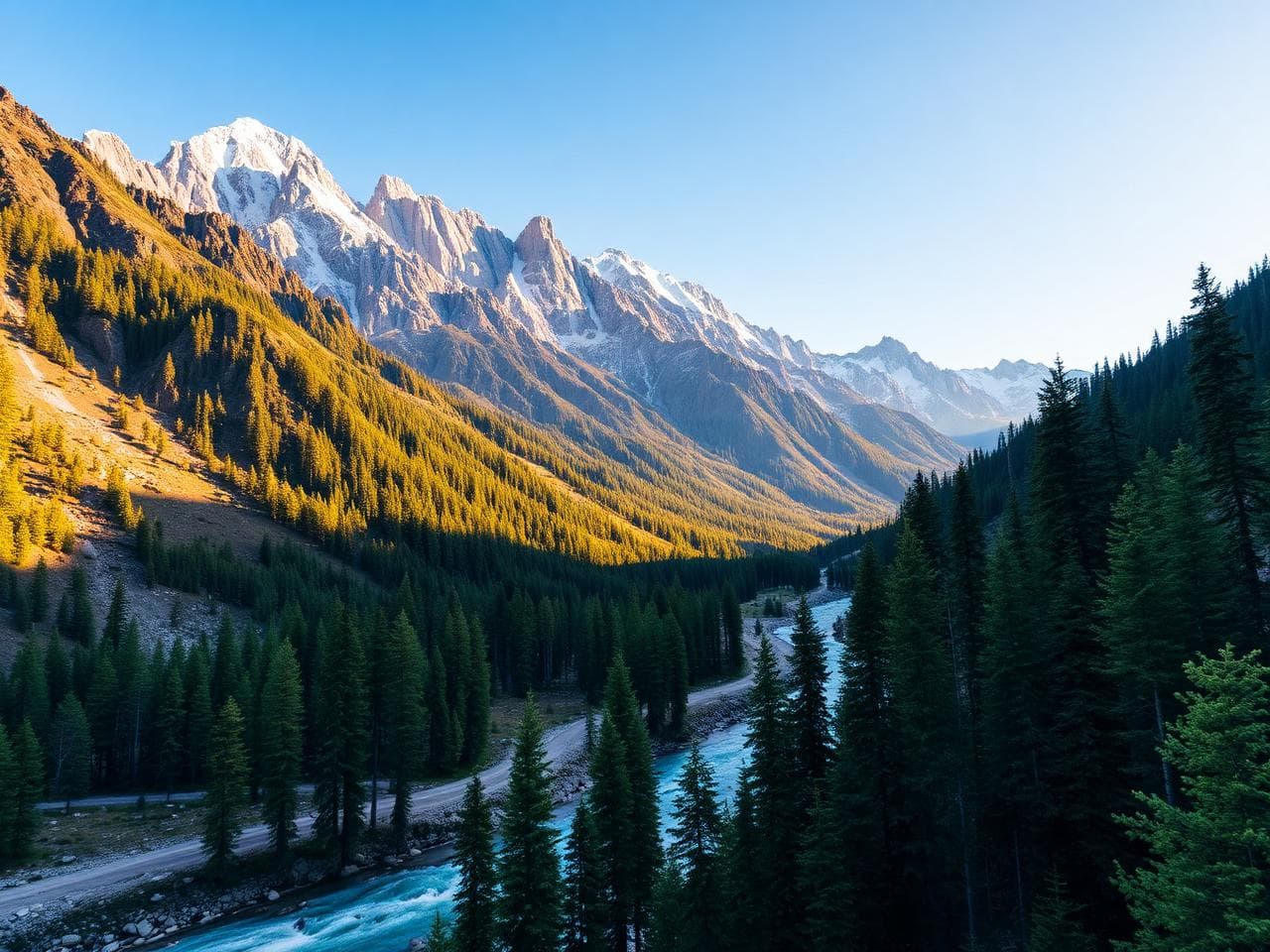
Stand anywhere in central Almaty, look south, and the city ends in a wall of snow. The Trans-Ili Alatau — the northern spur of the Tian Shan — rises straight off the southern edge of town and climbs past 4,000 meters, close enough that the peaks change color through the day. Those foothills are the reason the apple in your kitchen exists. Geneticists have traced every domesticated apple back to Malus sieversii, the wild apple that still grows in forests on these slopes, which is why the city's Soviet-era name, Alma-Ata, is usually rendered "father of apples." It's a fair claim to the title of the birthplace of the apple, and the city leans into it. Almaty was Kazakhstan's capital until 1997, when the government decamped north to a purpose-built capital on the steppe (now Astana). What got left behind is the better city: the largest in the country, the cultural and culinary center, and the one with the mountains in its backyard.
Why Almaty Is the "City of Apples"
The name is literal: Almaty comes from the Kazakh alma, apple. In 1929 the Soviet botanist Nikolai Vavilov traced the apple's wild origin to a grove just outside the city. Up to 80% of those wild apple forests were cleared over the 20th century, and what survives is now protected inside Ile-Alatau National Park. The Aport, an outsized deep-red local variety, was once the city's symbol.
Kok-Tobe and the View Over the Apple City
Start high. Kok-Tobe is a hill on the southeastern edge of town, around 1,100 meters, reached by a cable car that lifts you up over the rooftops to a small park crowned by the Almaty TV Tower. The view back over the city — grid streets running out toward the steppe on one side, the mountain wall on the other — is the orientation you want on day one.
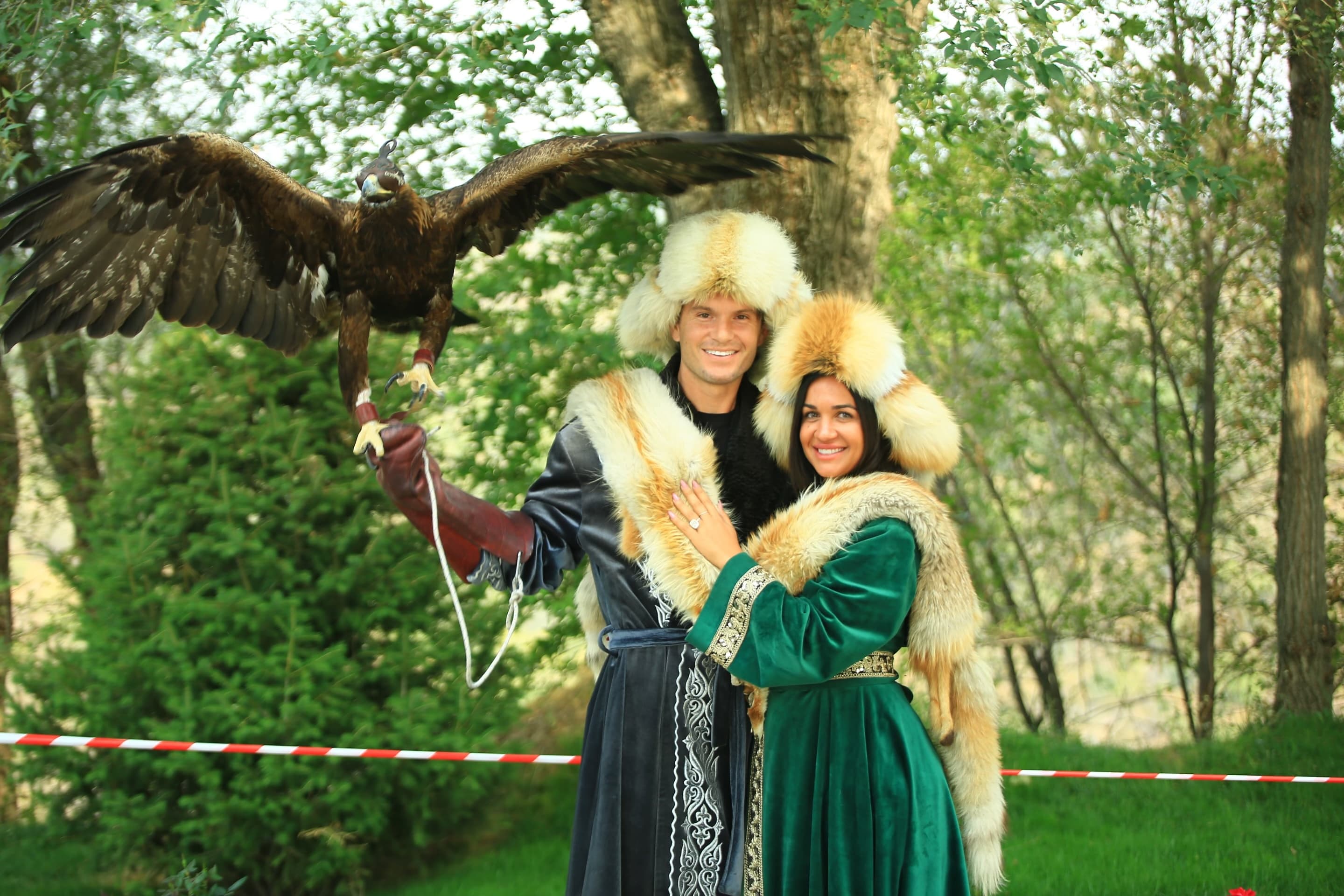
It's also where I got my profile photo. The park keeps birds of prey on hand for photos, and posing with one on a gloved fist is a near-mandatory Kok-Tobe ritual. It ties into something real: Kazakhstan has a centuries-old tradition of hunting on horseback with golden eagles (berkut), a nomadic skill still practiced by a handful of eagle hunters out west. Whether the bird on your arm is a true golden eagle or a smaller hawk is anyone's guess, but the lineage behind the photo op is genuine.
Up top you'll also find the granite Fountain of Desires, an apple sculpture you're meant to touch for luck — the city's origin story rendered in stone, in case the foothills behind it weren't enough of a reminder.
The Cathedral, the History, and a Room Full of Arcade Machines
Down in Panfilov Park sits the building that stopped me cold: the Ascension Cathedral, usually called the Zenkov Cathedral after the engineer who finished it. Completed in 1907 and standing about 56 meters tall, it's one of the tallest wooden buildings in the world — a Russian Orthodox church built almost entirely of timber and painted in colors that genuinely pop against the green of the park. It's one of the most striking churches I've walked into anywhere.
It's also a quiet engineering marvel. It's famously said to have been built without a single nail, and that's the story you'll hear on site — but it's not quite the whole truth. Engineer Andrei Zenkov designed the structure around a flexible "seismic basket," fitting the timber frame with metal braces and brackets so the whole building could sway rather than snap. When the 1911 earthquake leveled most of the city, the cathedral rode it out with little damage. So: very few nails, but not zero metal. The legend is better than the literal version, and the survival story is the real point.
A short walk away, the Central State Museum is where I actually learned Kazakh history — the long arc from Bronze Age steppe cultures and Scythian gold through the Kazakh khanates to the Soviet century and independence. It's the single best primer in the city for understanding the country you're standing in.
For a complete tonal whiplash, spend an hour at Yandex, a retro video-game and arcade museum where the machines all work and you're handed tokens to play them. Wandering rooms of vintage cabinets and consoles is a great, slightly surreal detour between the history museum and the bathhouse, and a fun way to kill time if the afternoon weather turns.
Soviet Almaty: A Private Sauna and a Market of Artifacts
To feel the Soviet city rather than just read about it, do two things.
First, the Arasan Baths — a vast bathhouse complex from the 1980s that's still the heart of bathing culture here. You can pay into the big communal Russian and Finnish sections, but the move is to book one of the private rooms: your own sauna, plunge pool, and rest area for a couple of hours. It's an old-school Soviet spa experience, and renting a room with a few people is cheap by any Western standard.
Second, head to Zhetysu Market (Жетісу Базары), a local outdoor market on the city's edge. This isn't a tourist bazaar — it's where I dug through tables of Soviet-era souvenirs and artifacts: pin badges, old watches, military odds and ends, propaganda ephemera, the physical leftovers of the USSR. Bring cash, haggle gently, and budget time to pick through it.
After Dark: Arbat, Craft Beer, and a Proper Hookah Lounge
Almaty's pedestrian spine is Arbat (Zhibek Zholy), and it comes alive at night — buskers, students, vendors, and a steady evening crowd. It's the natural starting point for a night out.
From there, two places earned their spots. Community is a craft-beer bar with a genuinely good lineup of local brews — the kind of independent beer scene you don't expect this far into Central Asia, and proof of how fast young Almaty is moving. And Hookahplace is top-notch if you want to settle in for a shisha: well run, good selection, exactly the late-night hang you want after a day in the mountains.
The Mountains Start Where the City Ends
This is the real argument for Almaty. You can be on a glacier-fed slope inside an hour of leaving your hotel.
Medeu and Shymbulak. Just up the gorge south of town sits Medeu, the world's largest high-altitude outdoor skating rink, sitting at around 1,690 meters. The thin mountain air and glacial meltwater ice made it a "factory of records" — hundreds of world speed-skating records were set on it, including a staggering 249 in its first year. One catch if you're planning a visit right now: Medeu closed in spring 2025 for a multi-year reconstruction, with reopening targeted around 2027–28, so confirm the status before you build a day around lacing up there. Directly above it, reached by cable car, is Shymbulak, the largest and most modern ski resort in Central Asia, with a top station above 3,200 meters. It's a nature lover's dream — green alpine landscapes in summer, genuinely good and genuinely cheap skiing in winter — and all of it is under an hour from downtown.
Big Almaty Lake. A turquoise alpine reservoir at about 2,510 meters, only around 15 km south of the city as the crow flies (longer by the winding mountain road). The color comes from glacial flour — ultra-fine rock dust suspended in the meltwater — and it shifts from blue to green with the light and the season. There's a high-altitude research station nearby and a checkpoint on the approach, so check current access rules before you go. As a half-day trip out of the city, it's hard to beat.
Charyn Canyon. The longer haul — roughly 200 km east, a full day out and back — but worth it. Its Valley of Castles is a gorge of red sandstone towers carved by wind and water over millions of years. Plenty of people call it a little brother of the Grand Canyon; I won't go that far, but I'll say what I thought standing in it: it looks like the American West. Drop someone into that canyon without telling them where they are and they'd guess Utah or Arizona long before Kazakhstan.
I went in early September, and it's a good window to copy: warm days in the city, cool clear evenings, the high mountains still green rather than buried in snow, and the summer crowds thinning out. If you want the ski version of Shymbulak instead, you're looking at roughly December through March.
Things to Do in Almaty
The city's set pieces — Kok-Tobe, the Zenkov Cathedral, Medeu and Shymbulak, Big Almaty Lake, and Charyn Canyon — each get their own section above. Two more belong on the list. The Green Bazaar, the central market, is the place to taste the Aport apple and the local produce. And on a longer trip, the Kolsai and Kaindy lakes make a day trip or overnight to the east — Kaindy is the odd one, with a submerged forest of bare, standing dead trees rising straight out of the water.
How Many Days Do You Need in Almaty?
Two days covers the city: the Green Bazaar, Kok-Tobe, Panfilov Park, and a run up to Medeu or Shymbulak. Four days is the sweet spot — add Big Almaty Lake and a full day in the mountains. Give it five or more if you want Charyn Canyon or the Kolsai and Kaindy lakes at a relaxed pace.
What It Costs
Almaty is inexpensive by Western standards. Figures below are 2026, in tenge with an approximate dollar amount at about 525 KZT to the dollar, a rate that drifts.
Inexpensive restaurant meal: ~5,000 KZT (~$10)
Mid-range dinner for two: ~18,000–20,000 KZT (~$35–40)
Local beer: ~1,000 KZT (~$2)
Budget double or hostel bed: ~5,000–6,000 KZT (~$10–13); a 3-star runs ~13,000 KZT (~$26–35); luxury ~$100+
Metro or bus ride: ~80–110 KZT (~$0.20); for taxis, use Yandex Go or inDrive, starting around 500 KZT
Medeu skating: ~1,800 KZT (~$4); Shymbulak day lift pass: ~9,000 KZT (~$19)
Plan on ~$20–40 a day as a backpacker, ~$50–80 mid-range, and $100+ for luxury. The airport is Almaty International (ALA).
Where to Stay
Base yourself in the central grid, roughly between Panfilov Park and the Arbat. Everything in the city core is walkable or a cheap Yandex taxi away, and you're pointed straight at the mountains for the day trips.
Budget: Almaty Backpackers, a long-running, central hostel that's an easy place to find other travelers and split a Charyn Canyon or Big Almaty Lake trip.
Mid-range: Kazakhstan-favorite boutique stays around Dostyk Avenue put you near the best restaurants and the cable car, with quick access up the gorge to Medeu and Shymbulak.
Luxury: The Ritz-Carlton, Almaty, in the Esentai Tower — the city's highest-end address, with a spa and the best skyline-and-mountain views in town.
These are affiliate links — booking through them supports Viator Modus at no extra cost to you. Same room, same price, it just helps keep the guides coming.
Tours Worth Booking in Almaty
The mountain day trips are the ones worth booking ahead, for the transport as much as the guide.
Recommended Experiences
A Few Days Beneath the Tian Shan
Give Almaty three or four days and it pays you back twice: a relaxed, green, Soviet-flavored city for the mornings, and serious mountains for the afternoons. Touch the apple sculpture on Kok-Tobe, stand inside the wooden cathedral, soak in a private room at Arasan, dig for Soviet relics at Zhetysu, then spend your other days on a glacier-fed lake and in a red-rock canyon that has no business being this close to a city of two million.
If Almaty is part of a wider Central Asia loop — and it should be — it pairs naturally with the Silk Road heavyweights to the south. Read next: my guides to Tashkent and Samarkand in Uzbekistan, or, if you're chasing more Tian Shan, Ala Archa National Park just across the border in Kyrgyzstan.
Save this guide and follow along for more from the region — there's a lot of Central Asia still to come.