North America
A Pacific-to-Caribbean Costa Rica route by local bus: Manuel Antonio's wildlife, where to stay, 2026 park rules, and Puerto Viejo's Afro-Caribbean history.
Costa Rica coast to coast by local bus, from the Pacific to Puerto Viejo, captured on my trip.
Costa Rica covers about 0.03% of the planet's land surface, yet it holds roughly 5% of the world's known biodiversity. In May 2012 I crossed it the slow way: San José to Quepos on a local bus, a few days in Manuel Antonio, then another bus to Puerto Viejo de Talamanca on the Caribbean coast. No Google Maps, no eSIM, just a well-worn copy of Lonely Planet's Central America on a Shoestring. This guide pairs that route with what has changed since, because several rules the old guidebooks taught you are now wrong.
Why does Costa Rica have no army?
On December 1, 1948, after a short civil war, junta leader José Figueres Ferrer abolished Costa Rica's national army. To mark it, he struck a wall of the Bellavista barracks in San José with a mallet. The 1949 constitution made the decision permanent in Article 12, and the country has had no standing army since.
The barracks became the National Museum of Costa Rica, which makes it the right first stop in San José before you catch a bus to the coast. The budget that once funded soldiers was redirected toward security, education, and culture, and the long-term bet shows. In 2025, the state utility ICE reported that 98.6% of the country's electricity came from renewable sources: hydro, geothermal, wind, biomass, and solar.
What was backpacking Costa Rica like before Google Maps?
In 2012, smartphones existed but offline maps and cheap data did not. The Lonely Planet was the operating system. Bus routes, hostel picks, and border tips all came from its pages, and navigation meant reading the map section, asking locals, and trusting that the bus would stop where the book said it would.
That constraint shaped the trip. You talked to people because you had to, which is how I ended up traveling the second half of this route with a group I met on my first day in Manuel Antonio.
How do you get from San José to Manuel Antonio by bus?
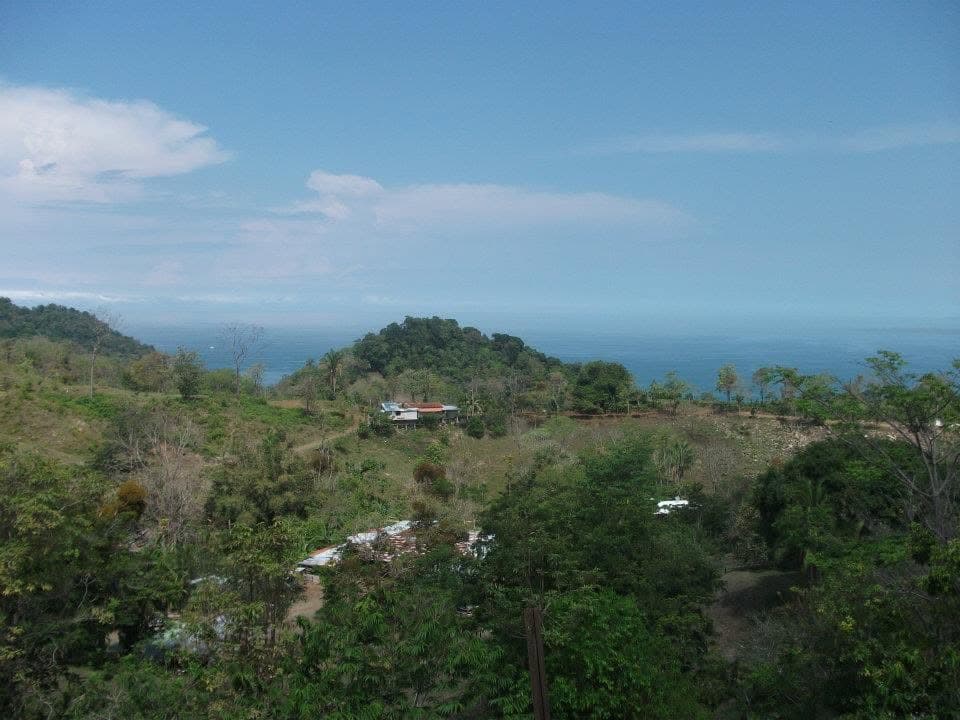
Manuel Antonio sits about 157 km from San José on the Central Pacific coast. Public buses still run the route, with Tracopa among the operators. The cheapest way is the one I took: a local bus to Quepos, then a short local bus up the hill to the park. Buses between Quepos and Manuel Antonio run roughly every half hour from early morning.
Watch the scenery as you approach Quepos. The town was built as a banana company town: the United Fruit Company bought out the local operation in 1934, cleared the mangroves, and laid out what is now downtown. When Panama disease wiped out the banana plantations in the mid-20th century, the region switched to African oil palm. Those endless palm rows lining the highway are the leftover of that pivot, decades before tourism arrived.
Is Manuel Antonio National Park worth the hype?
Yes, and the numbers explain why. Established in 1972, Manuel Antonio is one of the smallest national parks in Costa Rica, yet it ranks among the country's most visited. In 2011, Forbes named it one of the world's 12 most beautiful national parks. The park packs rainforest, mangroves, and four beaches (Manuel Antonio, Espadilla Sur, Tesoro, and Playita) into a compact peninsula you can walk in a morning.
Its size is the point. Few places on Earth concentrate this much visible wildlife in this little space, with 109 mammal species and 184 bird species recorded inside its boundaries.
Which animals can you see in Manuel Antonio?
The wildlife was the highlight of my entire trip. Expect:
- Sloths, both two-toed and three-toed. The three-toed sloth does something strange: about once a week, it climbs all the way down its tree to defecate on the ground, the most dangerous trip of its week. Researchers have linked the habit to the moths that live in its fur, which lay their eggs in sloth dung.
- Three monkey species: howler, white-faced capuchin, and squirrel monkeys.
- Frogs, iguanas, coatis, and toucans, often within a few meters of the main trail.
- Leafcutter ants. Watch the columns carrying leaf fragments across the trail. They don't eat the leaves. They use them to farm a fungus underground, which is what the colony actually eats.
Hire a licensed guide with a spotting scope, at least for your first visit. Guides find sloths and frogs you would walk straight past.
What has changed at Manuel Antonio since 2012?
If you are using an older guidebook or blog, update these:
- Tickets are online only. Since May 2021, SINAC (Costa Rica's national conservation agency) is the only seller of park admission. You cannot buy at the gate, and you need a valid ID.
- The park closes Tuesdays, not Mondays. Older sources list Monday closures. The park now opens Mondays and closes Tuesdays for maintenance. Hours are 7am to 4pm.
- Daily visitor caps apply. Tickets can sell out days ahead in the dry season (roughly December to April), so book as soon as your dates are set.
- Single-use plastics are banned inside the park. Bring a reusable bottle.
- Ignore roadside "ticket sellers." Buy admission only through the official SINAC website. Check SINAC for the current entry fee.
Where should you stay near Manuel Antonio?
Most hotels sit on the hill road between Quepos and the park. These three combine location, wildlife, and quality better than anywhere else in the area:
- Arenas del Mar Beachfront & Rainforest Resort. Set on Punta Quepos at the edge of the national park, this eco-focused property is one of the very few luxury resorts in Manuel Antonio with direct beach access. Best for: travelers who want jungle and beach without a shuttle.
- Tulemar Resort. Bungalow-style villas spread across a forested hillside with access to a private beach. Best for: privacy and space.
- Sí Como No Resort & Wildlife Refuge. A hillside resort with its own wildlife refuge on the property and a free beach shuttle. Suits both couples and families. Best for: seeing wildlife without leaving your hotel.
These are affiliate links — booking through them supports Viator Modus at no extra cost to you. Same room, same price, it just helps keep the guides coming.
On a backpacker budget, a hostel on the main road puts you within bus distance of the park and makes it easy to meet travel partners. That is exactly how I found mine.
How do you get from Manuel Antonio to Puerto Viejo de Talamanca?
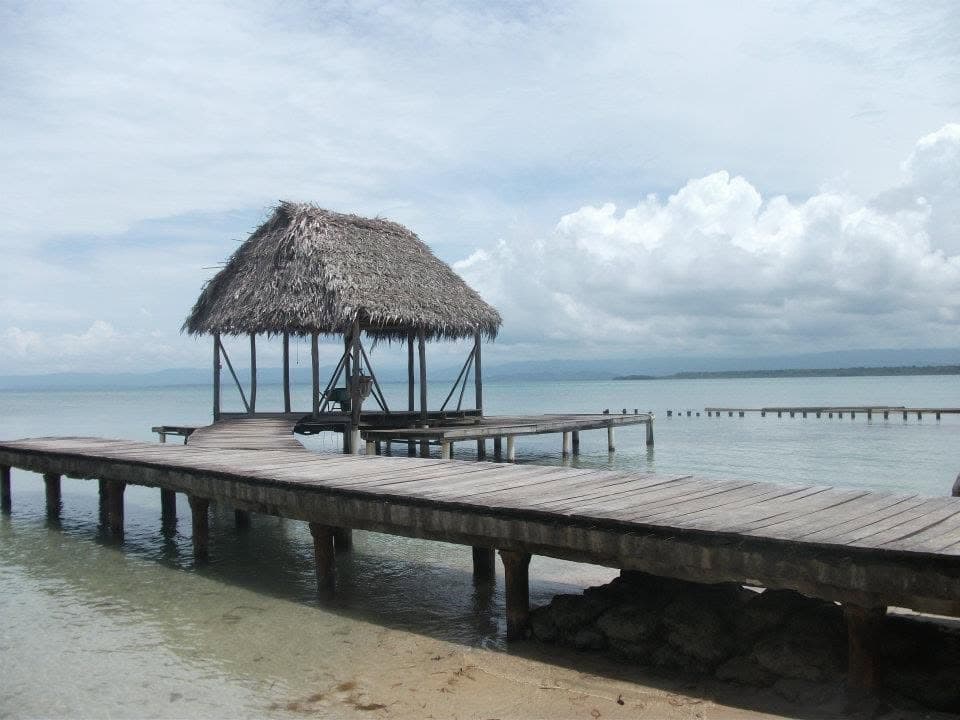
Crossing from the Pacific to the Caribbean coast by public bus takes most of a day, and in 2012 it felt like moving between two countries. I made the trip with the group I met at the hostel, which turned a long ride into one of the best days of the trip.
One mistake to avoid: Costa Rica has two towns called Puerto Viejo. Puerto Viejo de Sarapiquí is in the northern lowlands, far from the coast, and buses to both towns can leave from the same San José station showing the same destination sign. Make sure your ticket says Talamanca.
Why does Puerto Viejo feel like a different country?
Step off the bus in Puerto Viejo and the language, food, and music all shift. That is history, not tourism branding.
On December 20, 1872, a ship called the Lizzie arrived in Puerto Limón carrying 123 Jamaican workers to build the railroad to San José. Thousands more followed, and many stayed to work the banana plantations. For decades, Costa Rica restricted Black residents to Limón province. Not until 1949 were they allowed to travel freely to the Central Valley and become citizens. The result is the largest community of Jamaican origin in Central America, with its own language (Limonese Creole), Protestant churches, and a cuisine built on coconut, rice and beans, and Caribbean spice.
The town itself was founded by Afro-Caribbean settlers as Old Harbour, later renamed Puerto Viejo when the government pushed Spanish place names across the country. It stayed remarkably cut off: a road from San José did not arrive until the late 1970s, and electricity until the mid-1980s.
Surfers know it for Salsa Brava, a shallow reef break right in front of town that is widely considered the most powerful wave in Costa Rica.
How do you get around Puerto Viejo?
By bicycle. Everyone rides, and so did I: rentals are cheap, and the coast road is flat because it follows the shoreline. It runs south from town past Playa Cocles and Punta Uva toward Manzanillo, with jungle on one side and beaches on the other.
Two protected areas bracket the town. Cahuita National Park, to the north, protects coral reef and coastal rainforest. The Gandoca-Manzanillo Wildlife Refuge, to the south near the Panama border, feels wilder and less developed. Inland, the Talamanca mountains are the ancestral territory of the Bribri Indigenous people.
Is this still the best first route through Costa Rica?
For a first trip on a budget, yes. San José to Manuel Antonio to Puerto Viejo shows you the country's two coasts, its densest wildlife, and the Afro-Caribbean history most visitors never learn about, all reachable by public bus.
The difference in 2026 is planning. In 2012 you could show up at the park gate and walk in. Today you need SINAC tickets booked days ahead and a check on which day the park is closed. Do that, give Manuel Antonio at least two full days, and leave room for a few slow days on a bike in Puerto Viejo.
Found this useful?
If this guide helped plan your trip to Costa Rica, you can help fund the next one.
Buy me a coffee →