South America
Rio de Janeiro gave the world the second-most recorded song in history: "The Girl from Ipanema," written in 1962 about a teenager who walked to the beach past a corner bar in Ipanema. I based myself in that same neighborhood and worked remotely from it, using the beach as a launch point for Christ the Redeemer, the Maracanã, and the Santa Marta favela where Michael Jackson filmed "They Don't Care About Us." This is Rio from an Ipanema base, not a postcard.
Rio de Janeiro from an Ipanema base, captured on my trip.
The second-most recorded song in history was written about a street corner in Ipanema. In 1962 Antônio Carlos Jobim and Vinícius de Moraes watched a teenager walk to the beach past the Veloso bar, and "The Girl from Ipanema" came out of it. Only the Beatles' "Yesterday" has been covered more times.
Most people give Rio a postcard: the statue, the sugarloaf, a photo on Copacabana, gone. I based myself in Ipanema and worked from it for weeks, and that changes what the city is. It stops being a set of viewpoints and becomes a neighborhood you leave in the morning and come back to at night.
Basing in Ipanema
Ipanema is the stretch of sand between the Arpoador rock and Leblon, and it runs on a rhythm you can set a workday to. The beach is divided by numbered lifeguard posts, and the posts sort the crowd: each one has its own regulars. You learn which is yours in about two days.
The neighborhood is flat, gridded, and walkable end to end, which is not a given in Rio. I could work a morning at a cafe, cross to the sand for an hour at midday, and be back at a desk without a car. Everything I needed sat inside a few blocks. As a remote base it does the one thing a base has to do: it disappears into routine so the city can be the event.
Where to Stay
Stay in Ipanema itself if you want the walkable version of Rio. A few blocks back from the sand keeps you close to the beach, the cafes, and the metro without paying the full beachfront premium, and it puts Leblon and Copacabana within a short walk in either direction.
These are affiliate links — booking through them supports Viator Modus at no extra cost to you. Same room, same price, it just helps keep the guides coming.
Santa Marta
Santa Marta was the first favela in Rio to be pacified. The city's first Pacifying Police Unit, the UPP program, was established here in 2008 before it spread to the rest of the city. I went in with a local guide, which is the only way to do this right, and the community itself is the point, not a backdrop.
In 1996 Michael Jackson filmed part of the video for "They Don't Care About Us" on these slopes, directed by Spike Lee. A statue of him went up in 2010 at the same spot, a year after his death, and it still stands at the Mirante Dona Marta lookout with the city opening up behind it. Standing where the camera stood, with a guide who lives there telling you what the place actually is, is worth more than any viewpoint you reach by van.
Christ the Redeemer
Christ the Redeemer was named one of the New7Wonders of the World in 2007. What the postcard leaves out is that it is a lightning rod on a mountaintop: the statue is struck several times a year, and one strike damaged a thumb that had to be repaired in 2014.
The other thing the postcard leaves out is the weather. Corcovado makes its own cloud, and the mist rolls across the summit without warning, so the difference between a clear photo and a white wall is often a matter of minutes. Go early, watch the sky before you commit to the ticket, and treat a clear window as luck rather than a schedule.
The Maracanã
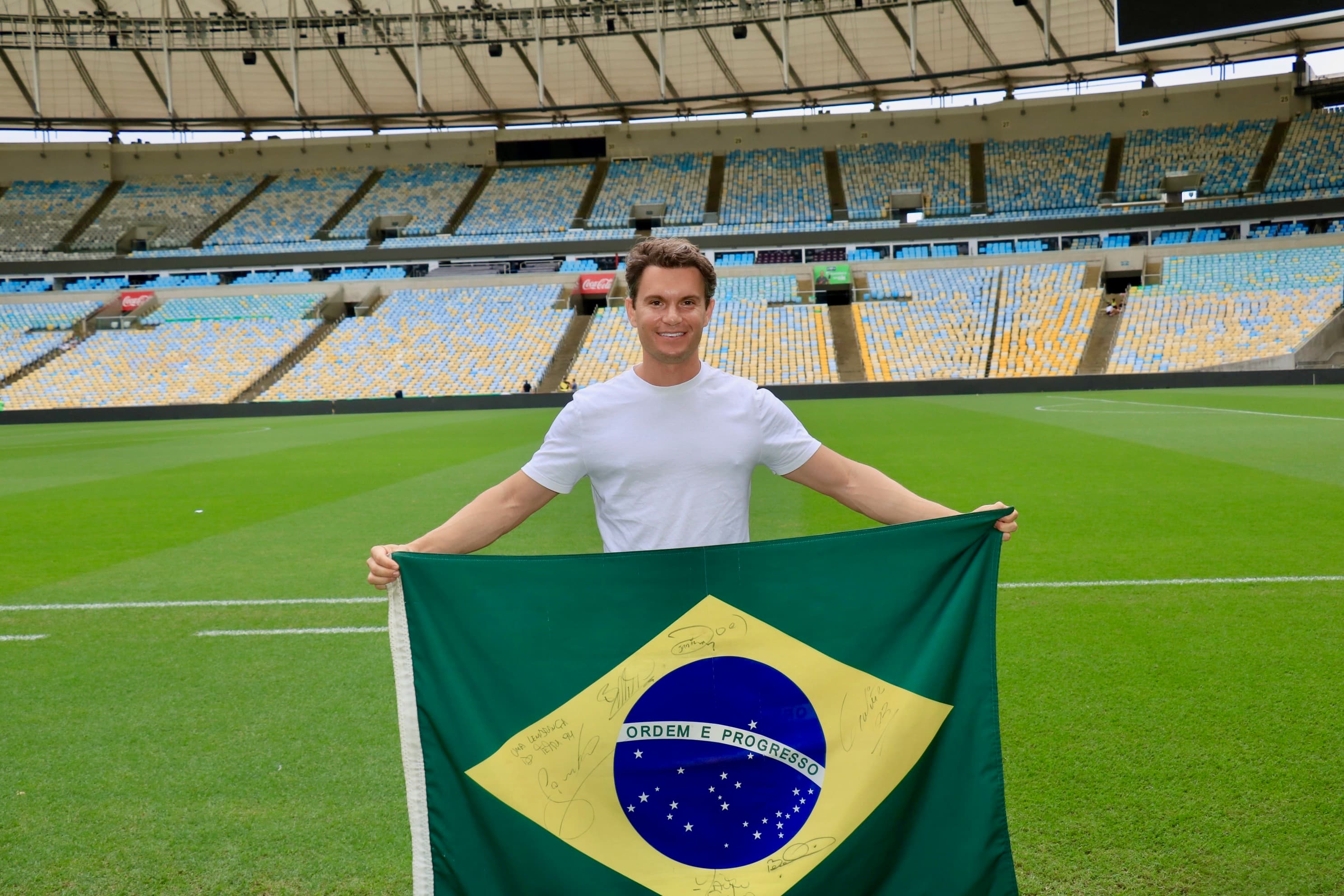
The Maracanã holds the largest crowd ever recorded at a football match. On July 16, 1950, an official 199,854 people packed in for the World Cup final between Brazil and Uruguay, and no match since has beaten it. Today, after decades of renovation, the capacity is roughly 78,838, so that number can never happen again.
That 1950 final is the "Maracanazo," the day Uruguay silenced the stadium and beat Brazil for the title on home soil. The ground has hosted two World Cup finals, 1950 and 2014, and it is where Pelé scored his 1,000th goal in 1969. On the tour you walk the players' tunnel and come up into the stands, and even empty the scale of the bowl explains why a defeat here became a national wound.
Recommended Experiences
These are affiliate links — booking through them supports Viator Modus at no extra cost to you. Same tour, same price, it just helps keep the guides coming.
Copacabana
Copacabana is the beach everyone photographs, and the thing worth photographing is under your feet. The promenade is paved in the black-and-white wave pattern of Portuguese calçada, a rolling optical current of set stone that runs the length of the beachfront. Once you notice it you cannot stop noticing it.
I caught TIM Music Rio here, an outdoor music festival staged on the sand with the crowd spilling toward the water. Watching a show on Copacabana beach, with that wave-pattern promenade at your back and the Atlantic in front of the stage, is the version of the beach the daytime photos never get to.
Dinner in Horto
The Rio dinner most visitors skip sits inland, in the leafy Horto neighborhood by the Botanical Garden, away from the beachfront where the tourist tables are. We ate at Elena Horto, and the setting alone reframes the city: quiet, green, residential, a version of Rio that never makes the postcard. It is the meal I would send someone to before any beachfront reservation.
Veneers in Rio
My wife had veneers done here, and the math is the reason people fly in for it. Brazil has one of the highest numbers of dentists per capita in the world, and cosmetic dental work runs a fraction of what the same procedure costs in the United States. The quality was not the compromise the price suggested, which is the whole case for doing it here.
Go with a Base
Rio rewards the traveler who stops treating it as a checklist. Pick a neighborhood, learn its rhythm, and let the statue and the stadium be day trips from a place you actually live in. Start in Ipanema.