Southeast Asia
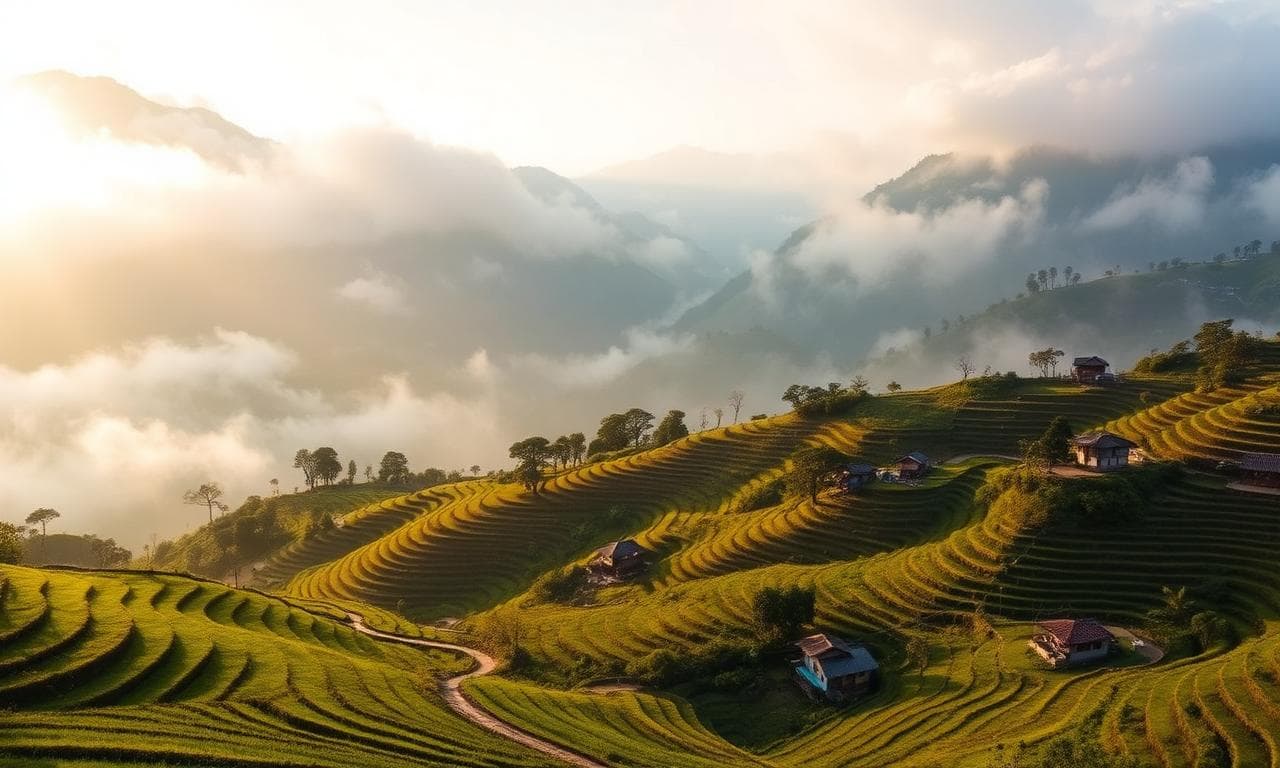
Sapa is a misty mountain town in the far north of Vietnam, perched on the slopes of the Hoàng Liên Sơn range close to the Chinese border. It's the gateway to Mount Fansipan — at 3,143 meters, the tallest mountain in Indochina — and surrounded by some of the most spectacular terraced rice paddies in Southeast Asia, farmed for generations by Hmong, Dao, and other ethnic minority communities.
What is Sapa really like in April?
We took a van transfer up from Hanoi in April, which is known as one of Sapa's foggiest months, and the mountains lived up to it. The cable car up Fansipan climbed straight into the cloud, and for most of the ride we could barely see a thing. At the summit, the clouds broke a few times, and those short windows gave us some of the most striking views of the trip. If clear views are your priority, keep that in mind when you pick your dates. Sapa town itself has a relaxed, backpacker feel, with plenty of restaurants and cafes to warm up in after a day in the mist.
Things to Do
Trek through the terraced rice valleys around Cat Cat, Lao Chai, Ta Van, and Y Linh Ho villages — full-day and overnight homestay treks with local Hmong guides are the highlight of any Sapa visit. Summit Mount Fansipan, the highest peak in Indochina, either by an intense 2–3 day trek or via the modern cable car from Sapa town. Visit the colorful Bac Ha Sunday market, one of the largest ethnic minority markets in Vietnam, about a 2-hour drive from Sapa. Stroll the misty town center, drop into Sapa Stone Church, and ride the alpine roller coaster down through the pine forests near the Fansipan cable car station.
Best Time to Visit
March to May and September to November are the best overall, with manageable temperatures and the rice terraces at their most photogenic (vivid green in spring, then golden just before the September harvest). Summer (June–August) brings heavy rain but also lush green terraces. Winter (December–February) is cold, foggy, and can even bring occasional snow at altitude — atmospheric but limiting for trekking. In our experience, April can be heavily misty, so expect limited views from Fansipan.
Where to Stay
Stay in central Sapa town for restaurants and tour access, or for a much more memorable experience, book a homestay or eco-lodge in one of the villages a short drive away.
Budget: Go Sapa Hostel, a friendly, well-run hostel in the town center with great views, good food, and easy access to organized treks.
Mid-range: Sapa Clay House (Ta Van Village), a beautiful eco-lodge in a Giay village 20 minutes from town with stunning valley views, hearty meals, and direct access to trekking trails.
Luxury: Hotel de la Coupole — MGallery, an art-deco-styled luxury hotel in central Sapa with a spa, indoor pool, and panoramic mountain views — by far the most polished stay in town.
These are affiliate links — booking through them supports Viator Modus at no extra cost to you. Same room, same price, it just helps keep the guides coming.
Getting Around
Most visitors travel from Hanoi by overnight train to Lao Cai (8 hours), then a 1-hour minibus up to Sapa, or by direct sleeper bus (6 hours) on the new expressway. Within Sapa town walking is easy; for villages and trailheads, motorbike taxis and tour vans are the standard. Trekking is the best way to experience the landscape, ideally with a local Hmong guide — both for the views and for the cultural context.
Hidden Gems
Skip the heavily touristed Cat Cat Village and instead trek the longer Lao Chai–Ta Van route, ideally with an overnight homestay with a Hmong or Giay family — sharing a home-cooked meal and rice wine with the family is the highlight most travelers remember most. Also worth doing: get up before dawn and head to the Fansipan cable car for the first run of the day — you'll often rise above the cloud layer for a sea-of-clouds sunrise that is genuinely once-in-a-lifetime. For coffee with a view, Le Gecko and The Hill Station in town have terraces overlooking the Muong Hoa Valley.
Continuing south through Vietnam? Read next: my guide to Hue, the country's last imperial capital.
Found this useful?
If this guide helped plan your trip to Sapa, you can help fund the next one.
Buy me a coffee →