Africa
The only Ancient Wonder still standing, the myth about who built it, and the billion-dollar museum that just changed how you see Egypt. Plus where to actually stay.
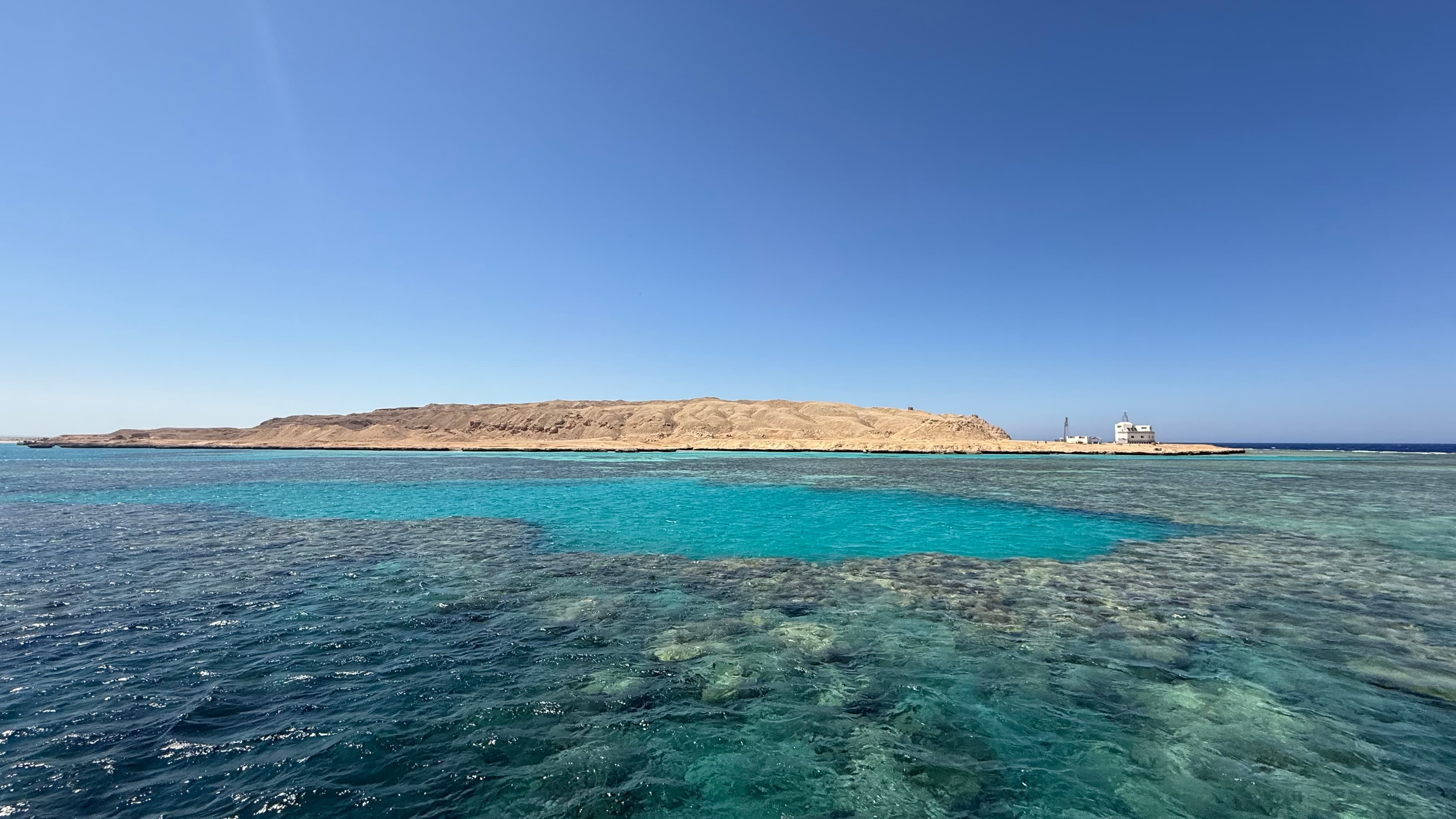
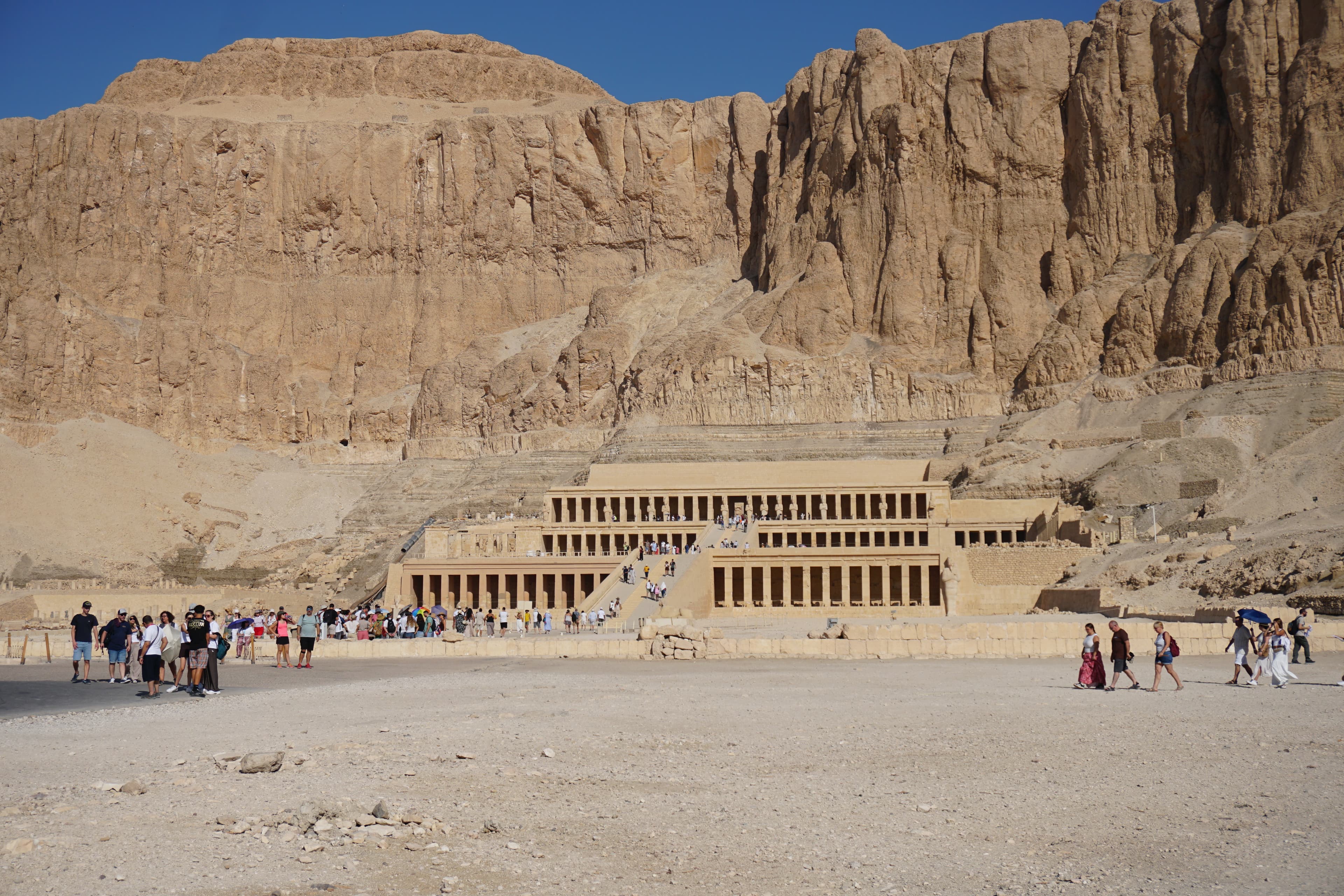
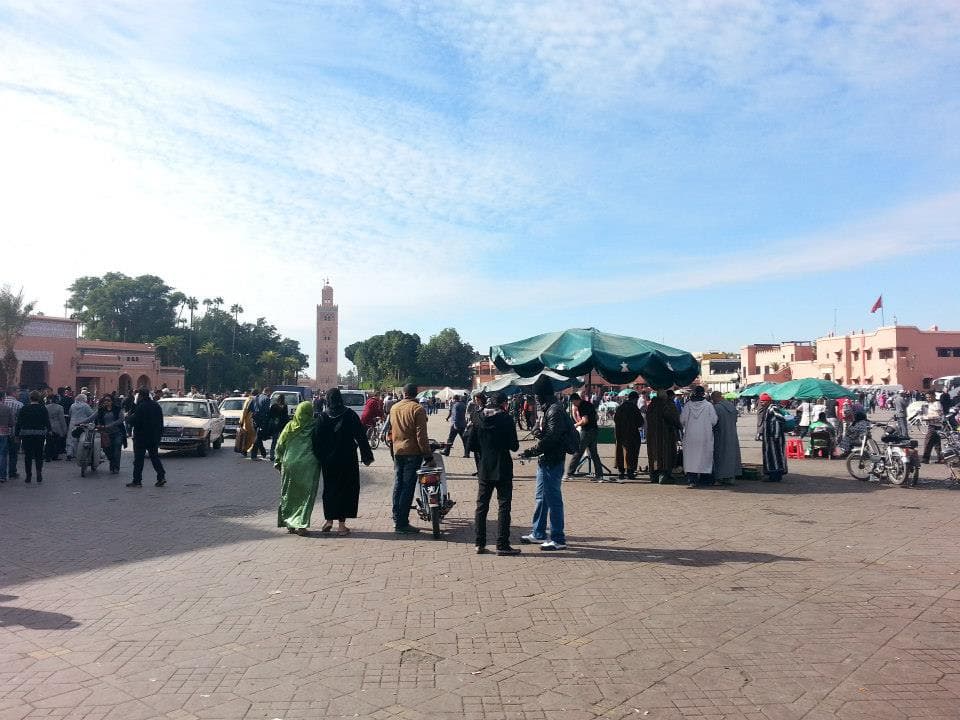
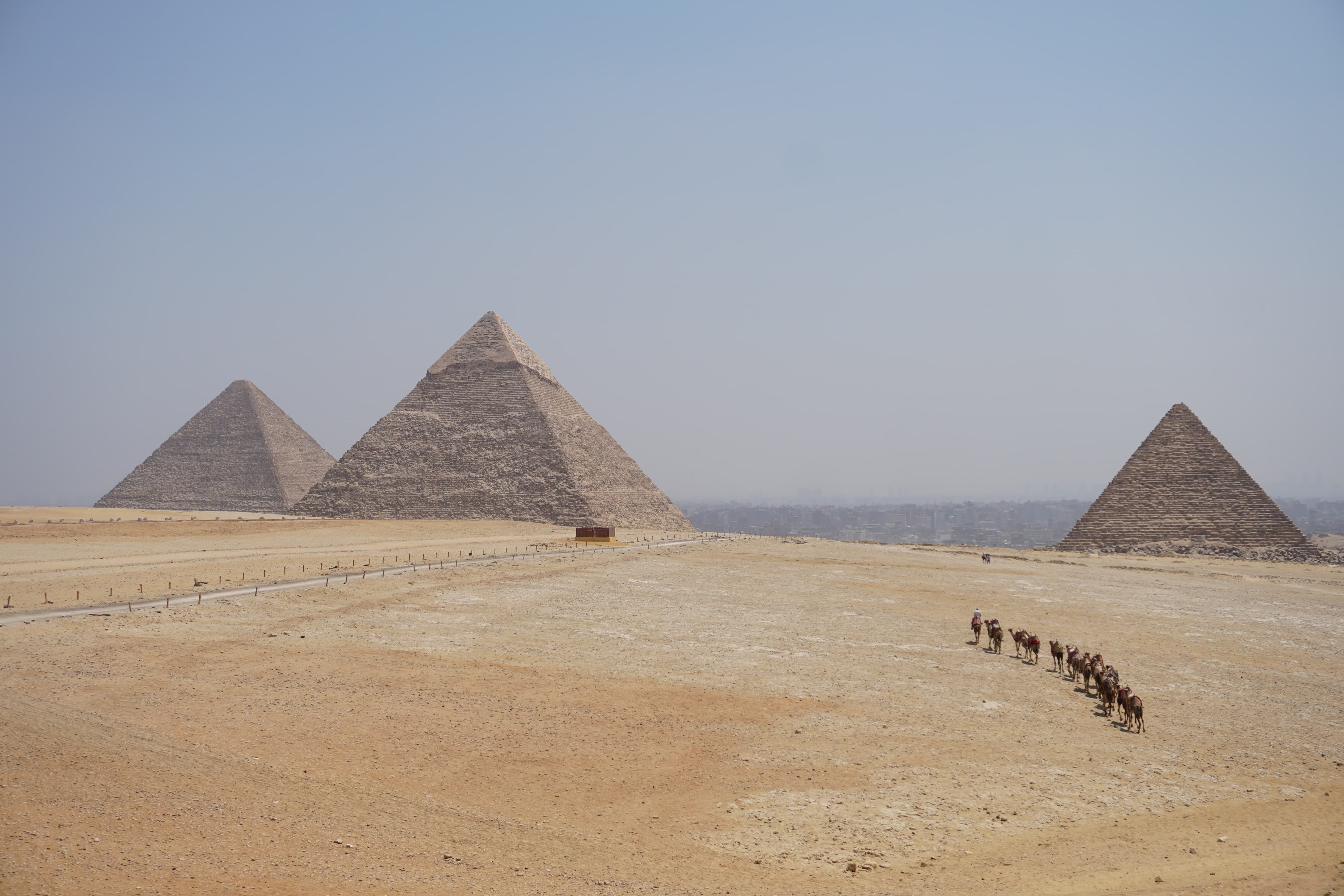
Scenes from the Giza plateau outside Cairo, captured on my trip.
Every other Wonder of the Ancient World is gone. The Hanging Gardens, the Colossus of Rhodes, the Lighthouse of Alexandria: rubble, legend, or nothing at all. One survived. It has stood on the edge of the desert outside Cairo for roughly 4,500 years, and for 3,800 of those it held a record no other building came close to touching.
That building is the Great Pyramid of Giza. I visited on August 14, 2026, and I want to tell you the parts most people skip, plus a lodging call that will change how much of Egypt you actually see.
Why is the Great Pyramid still the most staggering thing you can stand next to?
For 3,800 years, the Great Pyramid was the tallest structure humans had ever built. Nothing surpassed it until the spire of Lincoln Cathedral went up in England around 1311 AD. Sit with that: a monument raised around 2560 BC for the pharaoh Khufu outlasted every cathedral, tower, and fortress the world managed to build for nearly four millennia.
The numbers do not soften with familiarity. The pyramid is made of roughly 2.3 million stone blocks, each averaging about 2.5 tonnes. It is the only surviving structure of the original Seven Wonders. And it is still giving up secrets: in 2017, physicists using muon imaging (the same particle-scanning technique used to study volcanoes) detected a previously unknown cavity inside it, roughly 30 meters long, now called the "Big Void." We have studied this thing for centuries and we still do not fully understand it.
Who actually built the pyramids?
Here is the fact that reorders the whole site once you know it. The pyramids were not built by slaves.
The image of whipped captives dragging stones under the sun comes from one source: the Greek historian Herodotus, who arrived in Egypt in the fifth century BC and wrote down a story about a monument that was already older to him than he is to us. Hollywood did the rest. It stuck for two thousand years.
The ground says otherwise. Since 1990, excavations at Heit al-Ghurab, the workers' village just southeast of the pyramids, have revealed a state-organized, paid, and remarkably well-fed workforce. Analysis of the animal bones shows these laborers ate beef and mutton regularly, which in ancient Egypt was a luxury even many nobles did not enjoy daily. They drank beer. They received medical care. And when workers died during construction, some were buried in tombs of honor within sight of the pyramids they raised, a privilege reserved for people the state valued, not property it discarded.
So when you stand at the base, you are not looking at a monument to cruelty. You are looking at one of the earliest and most sophisticated logistics operations in human history, run by skilled crews who were fed and paid to do it.
What about the Sphinx?
Carved from a single mass of limestone, the Great Sphinx faces due east, aligned with the sunrise. It is the largest monolithic statue in the world. Most visitors give it ten minutes and a photo. Give it more. Walk the causeway and notice how the whole plateau was engineered as one connected complex, not three separate monuments dropped in the sand.
Is the Grand Egyptian Museum worth it?
Yes, without hesitation, and it is the single biggest reason to time your trip well now rather than later.
The Grand Egyptian Museum (the GEM) sits about 2 km from the pyramids and opened to the public in November 2025 after a state inauguration on November 1. It took more than 20 years and roughly one billion dollars to build. It is now the largest museum on Earth dedicated to a single civilization.
The headline is Tutankhamun. For the first time since Howard Carter opened the tomb in 1922, the complete collection is displayed together: all 5,398 objects, the gold mask, the throne, the reassembled chariots, in one place. For a century those treasures were split, stored, or shown in fragments. Now you see the entire burial as it was found.
The building itself is a piece of the story. Designed by Heneghan Peng Architects, its triangular plan is aligned with the pyramids of Khufu and Menkaure so that the monuments frame the view as you move through it. I spent far longer here than I expected to. Buy tickets in advance and treat it as a half day, not a stop.
The Tahrir Square connection most tour guides skip
Before the GEM, King Tut's treasures lived somewhere else: the Egyptian Museum on Tahrir Square, opened in 1902, in the heart of downtown Cairo. That building held Egypt's antiquities for generations, and it still holds a vast collection worth seeing.
But Tahrir Square is famous for something more recent. On January 25, 2011, it became the center of the Egyptian Revolution. Eighteen days of protest filled the square, and on February 11, President Hosni Mubarak resigned, ending nearly 30 years in power. "Tahrir" means Liberation. The name predates the uprising, but history caught up with it in dramatic fashion, and it happened steps from a museum full of the oldest artifacts on the planet.
That is the throughline of a good Egypt trip: 4,500 years of pharaohs in Giza, a revolution in living memory downtown, and a brand-new museum bridging the two.
Should you stay in Giza or downtown Cairo?
I stayed in Giza with a direct view of the pyramids, and waking up to that is genuinely hard to beat. But here is my honest recommendation: base yourself around Tahrir Square in downtown Cairo instead.
The logic is simple. The pyramids and the GEM are a half-day to full-day out from either location, so the drive is a tradeoff you make once. Everything else worth doing (the old Egyptian Museum, Islamic Cairo, Khan el-Khalili, the Nile corniche, the cafes and restaurants) is on your doorstep downtown. In Giza, once you have seen the pyramids, your evenings run out of options fast. Downtown, they do not.
Yes, you will spend a bit more time in the car reaching the plateau. You will get that time back tenfold everywhere else.
Three mid-range stays around Tahrir Square
- Steigenberger Hotel El Tahrir. The value pick, and the most on-theme: it sits right on Tahrir Square, overlooking the old Egyptian Museum, with an outdoor pool and a strong reputation for its breakfast. Rates often start around $114, which is rare for a chain at this level of location.
- Talisman Hotel de Charme. For character over polish. This Belle Epoque boutique hides on an upper floor of an old downtown building, reached by an original cage elevator, with Egyptian carpets and rooms decorated individually rather than to a template. A short walk from the square, deep in the atmosphere of old Cairo.
- Cleopatra Hotel. A clean, central, no-drama option steps from the Egyptian Museum and the square, with reliably well-reviewed staff. The pick when you want simple and close without paying for a pool you will not use.
Use the map above to check live pricing and availability for your dates, since downtown rates move with the season.
The bottom line
Go for the pyramids. Stay for the fact that almost everything you thought you knew about them, including who built them, is out of date. See the GEM while the Tutankhamun galleries are still the newest thing in world travel. And sleep downtown, near a square where 4,500 years of history sits a few streets from a revolution most of us watched happen.
Standing at the base of the last Ancient Wonder is the easy part. Understanding what you are actually looking at is the part worth traveling for.
Found this useful?
If this guide helped plan your trip to Giza, you can help fund the next one.
Buy me a coffee →