Europe
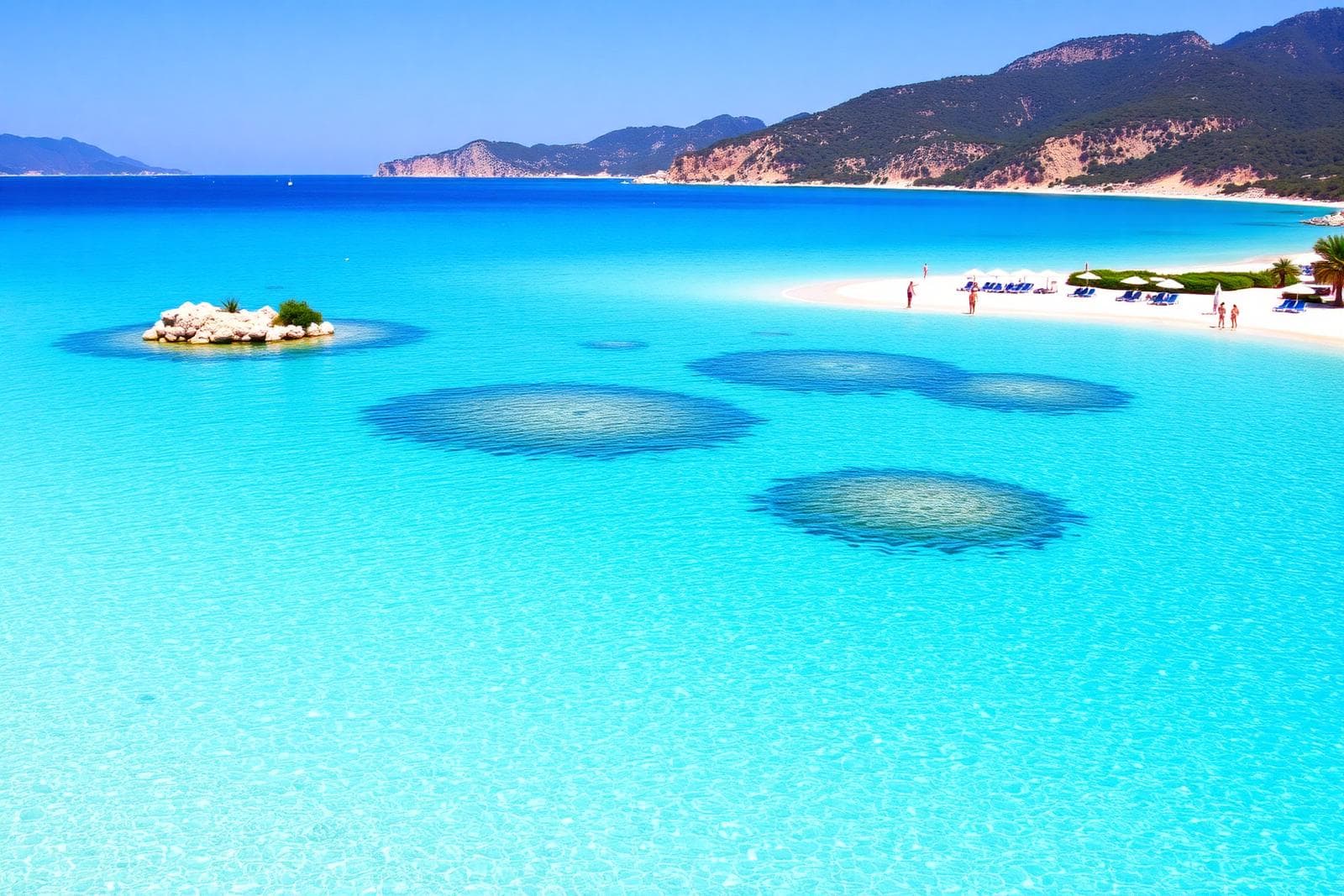
Ksamil is a small coastal village on the Albanian Riviera famous for its turquoise water, white sand beaches, and a string of tiny offshore islands you can swim or paddle to. Just minutes from the Greek island of Corfu and the ancient ruins of Butrint, it has quickly become one of the most talked-about beach destinations in Europe.
Things to Do
Spend your days hopping between Ksamil's four main beaches, each with crystal-clear shallow water and sun loungers for rent. Swim or kayak out to the Ksamil Islands, four small uninhabited islets just offshore, officially the Islets of Ksamil (Tetranis), with the two largest joined by a narrow sandbar, which is why some counts say three. Visit the UNESCO-listed ruins of Butrint, a remarkable layered archaeological site spanning Greek, Roman, Byzantine, and Venetian eras, set in a lagoon-side national park just south of town. Take a half-day trip up to the Blue Eye (Syri i Kaltër), a mesmerizing natural spring with impossibly blue water. South of the village, Pema e Thatë is a beach club reached by a rough road through Butrint National Park (or by boat), known for its over-water net cabanas, a DJ scene, and views across to Corfu. Nearby, the tiny southern cove of Puerto Rico Beach is worth it for those same over-water net loungers more than for the food. For a break from the beaches, head up to Lekuresi Castle, which has some of the best views in the area, looking out over Saranda with Corfu visible across the water. On the way up, Natyra Restaurant pairs sweeping valley views with excellent food.
Recommended Experiences
These are affiliate links — booking through them supports Viator Modus at no extra cost to you. Same tour, same price, it just helps keep the guides coming.
Butrint
Butrint is one of the most important archaeological sites in the Balkans, and in 1992 it became the first site in Albania granted UNESCO World Heritage status. UNESCO describes it as "a microcosm of Mediterranean history," and on the ground that is exactly what you walk through: one civilization layered on top of another over nearly three thousand years.
The site has been inhabited since the Bronze Age, with Greek contact from around the 7th century BC. Myth gives it an older origin still. In Virgil's Aeneid the city, ancient Buthrotum, was founded by Trojan exiles led by the seer Helenus, a son of King Priam, and Aeneas himself stopped there on his way to Italy. That is legend rather than history, but it is the story the ancients told about the place.
What survives is the layering. Butrint was a Greek colony, then a Roman city that Julius Caesar visited in 44 BCE, then a Byzantine bishopric, and finally a Venetian holding, before it was abandoned in the late Middle Ages once marshland closed in around it. The highlights to find on the ground include a well-preserved Greek theatre, the Temple of Asclepius, Roman baths, a paleo-Christian baptistery with a mosaic floor, and a Venetian tower guarding the water.
Butrint sits just south of Ksamil, and the far side of the site is reached by a hand-pulled cable ferry across the lagoon, the same short crossing noted in Hidden Gems, which locals have used for generations.
Recommended Experience
Guided Tour of Butrint National Park
A guided walk through Butrint with someone who can read the layers for you, from the Greek theatre and Roman baths to the paleo-Christian baptistery, is the difference between seeing old stones and understanding three thousand years of Mediterranean history.
The Blue Eye (Syri i Kaltër)
The Blue Eye, Syri i Kaltër in Albanian, is a vertical karst spring that feeds the Bistricë River. Its depth is a genuine mystery: divers have only ever reached about 50 metres down before the sheer upward force of the water pushes them back, and no one has yet found the bottom.
The spring holds a constant 10 to 13°C year-round and is the most powerful karst spring in Albania, pushing up around 18.4 cubic metres of water per second. The color is the draw, a deep blue eye ringed by paler turquoise. Swimming is officially prohibited, so plan to look rather than dip, and go early to beat the tour buses.
Recommended Experience
Blue Eye Spring Day Trip
A half-day trip out to the Blue Eye, often paired with Gjirokastër or a monastery stop, so you can see the spring and the surrounding valleys without renting a car for the day.
Best Time to Visit
Late May, June, and September are the sweet spot: warm sea, sunny days, and far fewer crowds than peak July and August, when Ksamil gets very busy with European holidaymakers. October still has swimmable water but quieter beaches. Winter is largely shut down. One honest warning about August: come then and it will be crowded, full stop, with packed sunbeds and every cove busy. Set your expectations accordingly, or stick to the shoulder season.
Food and Drink
Albanian cooking leans on the mountains and the Mediterranean at once. Tavë kosi, baked lamb and rice under a set topping of yogurt and egg, is the dish most often named as the national dish, though there is no official designation, so take the title as popular consensus rather than decree. Byrek, a layered filo pie filled with cheese, spinach, or meat, is the everyday staple you will see everywhere, and fërgesë, a rich bake of peppers, tomato, and cottage cheese, is another classic worth ordering.
Ksamil's own edge is seafood. The Butrint lagoon supports mussel farming, so midhi (mussels) reach village tables within hours of coming out of the water, alongside fresh grilled fish such as sea bream (koce) and sea bass (levrek). Prices are part of the appeal: eating and drinking here runs roughly 40 to 60% below comparable spots in Greece or Croatia.
Recommended Experience
Butrint Lagoon Mussel-Farm Boat Tour
A boat trip out across the Butrint lagoon to the mussel farms, usually with a tasting of the shellfish that reaches Ksamil's tables the same day. It is an easy way to see the quieter, working side of the water behind the beaches.
Where to Stay
Most accommodation in Ksamil is family-run guesthouses and small hotels within a 5-10 minute walk of the beaches. Book early for summer.
Budget: Guest House Brari, a friendly, well-reviewed family-run guesthouse with clean rooms, a balcony, and excellent value just a short walk from the beach.
Mid-range: Bloom Ksamil Hotel, a modern boutique hotel with a rooftop pool, sea views, and stylish rooms, one of the best mid-range bases in town.
Luxury: Maritim Hotel Plaza Ksamil, a beachfront property with direct access to the sand, multiple pools, and full resort amenities.
These are affiliate links — booking through them supports Viator Modus at no extra cost to you. Same room, same price, it just helps keep the guides coming.
Getting There
I flew into Corfu (CFU) in Greece and took the ferry across to Saranda, with Ksamil sitting just south of there. One thing to plan for on that route: Albania is not in the EU or the Schengen Area. It is an EU candidate country, and negotiations have moved quickly of late: Albania opened all 33 negotiation chapters in 2025 and provisionally closed its first chapters in 2026, aiming to conclude negotiations by 2027 and join by 2030, a timeline widely viewed as ambitious. In practice that means crossing from Corfu involves clearing Albanian passport control on arrival, so keep your passport handy when the ferry lands in Saranda, and check Albania's visa rules for your nationality first (Farhaven lists them by destination).
Getting Around
Most travelers arrive via the small city of Saranda, 20 minutes north, which connects by ferry to Corfu (Greece) and by bus to Tirana. From Saranda, frequent local minibuses (furgons) run to Ksamil for a couple of euros. Renting a car is the best way to explore the wider Albanian Riviera and reach Butrint and the Blue Eye on your own schedule. The village itself is walkable. If you want more than beach time, consider basing yourself up in Saranda rather than Ksamil (it has far more dining, nightlife, and general buzz) and riding a scooter the 20 minutes down to the beaches each day. Either way, walk Saranda's seafront promenade after dark, when the whole town spills outside and the waterfront lights up.
Hidden Gems
Skip the main beach strip at peak hours and walk south toward the Butrint National Park boundary, where you'll find quieter coves and pine-shaded shoreline. For dinner, head inland a few minutes to find family-run taverns serving fresh-caught fish and Albanian wine at a fraction of the beach prices. Also worth doing: take the small boat across the lagoon at Butrint, a 30-second ride on a hand-pulled cable ferry that locals have been using for centuries.
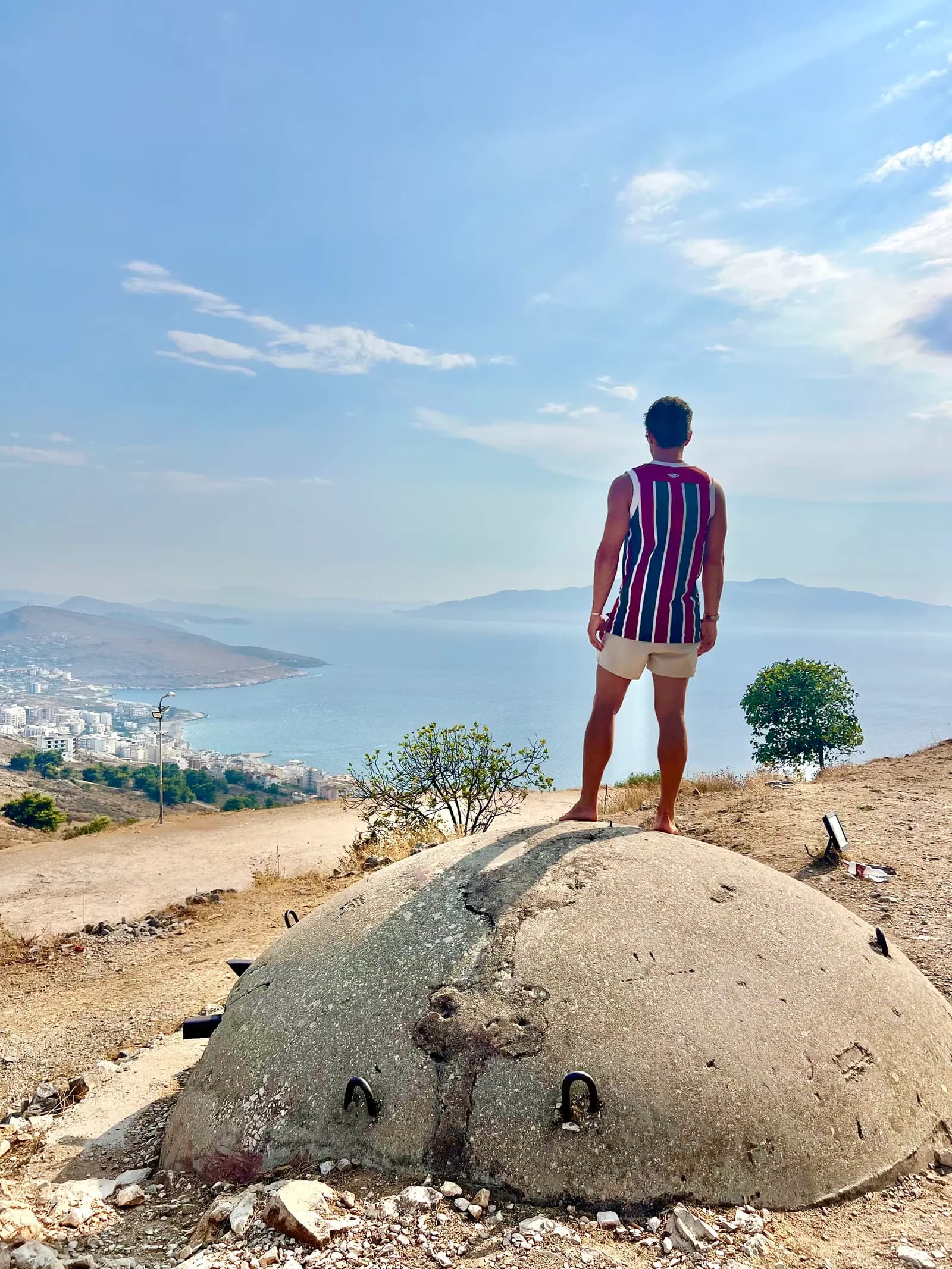
The Bunkers
More than 170,000 concrete bunkers are scattered across Albania, from beaches to mountain passes and even in front of apartment blocks. They were built between roughly 1967 and 1986 under communist dictator Enver Hoxha, part of a national bunkerization program (bunkerizimi).
The driver was paranoia. Hoxha had broken with both the Soviet Union and Mao's China, leaving Albania one of the most isolated countries in Europe and earning it the nickname "the North Korea of Europe." He was convinced an invasion was coming from NATO, the USSR, or Yugoslavia, and the idea was that in such an attack the entire population could fight from these positions. The invasion never came. Today many of the bunkers have been repurposed into cafes, bars, and museums.
Is Ksamil in Albania or Greece?
Ksamil is in Albania, on the southern Ionian coast, just across the water from the Greek island of Corfu.
How do I get to Ksamil from Corfu?
Take the ferry from Corfu to Saranda, then a local minibus (furgon) or a short drive south to Ksamil. Albania is outside the Schengen Area, so bring your passport for control on arrival.
When is the best time to visit Ksamil?
Late May, June, and September bring warm water and far smaller crowds than the July and August peak.
How many Ksamil islands are there, and how do I reach them?
Four uninhabited islets sit just offshore, reachable by kayak, paddleboard, or a short boat taxi. Two of them are joined by a sandbar, which is why some counts say three.
Is Ksamil expensive?
No. It is one of the better-value beach destinations in Europe, typically well below Greek or Croatian prices, though beach-club sunbeds in peak season cost extra.
Is the water really that clear?
Yes. The shallow, sheltered Ionian coves are genuinely turquoise, which is what drives the "Maldives of Europe" comparison.
Found this useful?
If this guide helped plan your trip to Ksamil, you can help fund the next one.
Buy me a coffee →