Europe
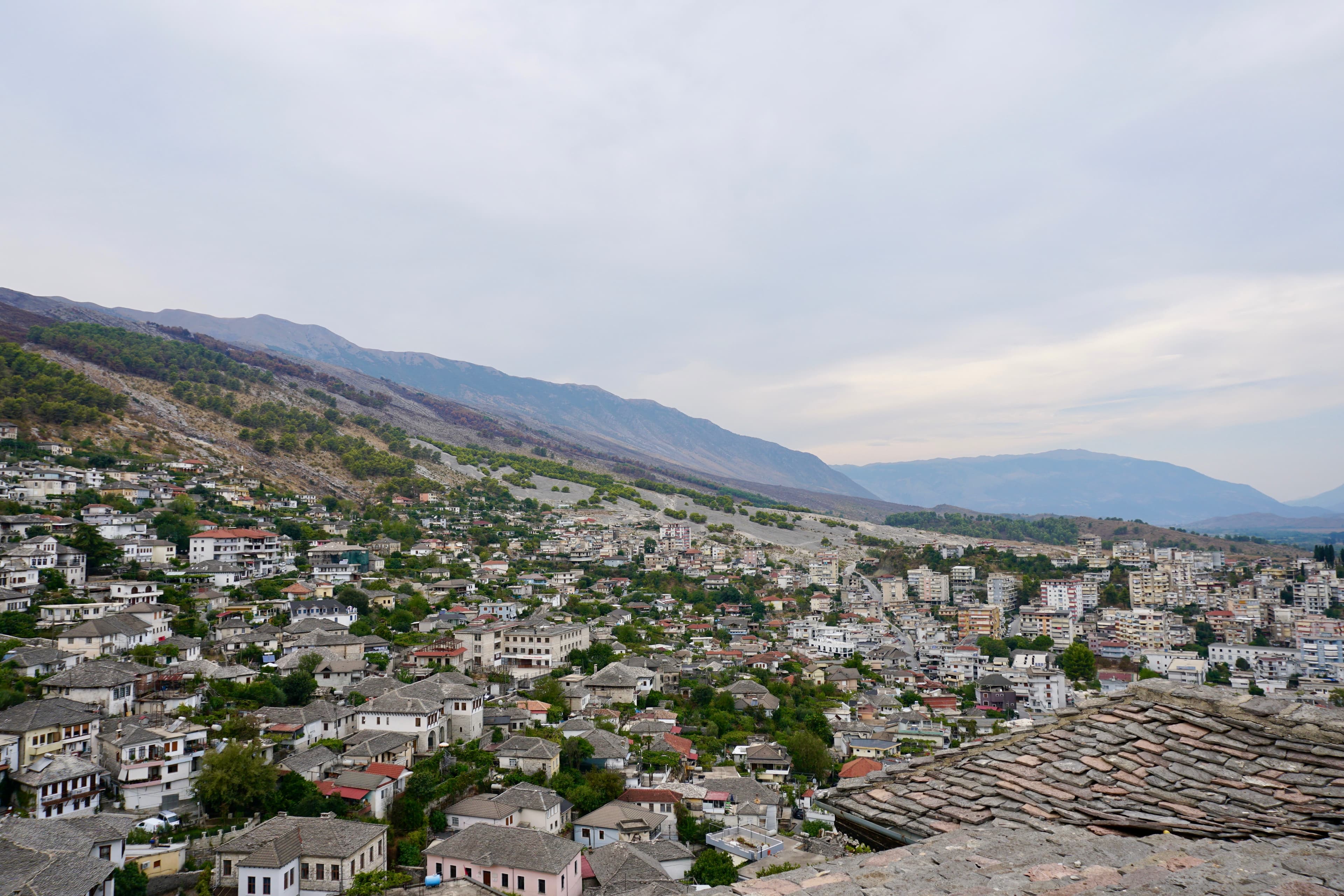
Gjirokastër is a stone town in southern Albania, about a 1.5-hour drive inland from Sarandë and the coast. Its houses are built almost entirely from local stone, roofs included, which earned it the name the City of Stone, and it has been a UNESCO World Heritage Site since 2005, inscribed jointly with Berat. One of the best-preserved Ottoman towns in the Balkans, it climbs the slopes of the Gjerë mountains below one of the largest castles in the region. I came up from Sarandë after a few days on the coast and found a place that feels a world away from Albania's coastal cities.
Scenes from Gjirokastër, the City of Stone, captured on my trip.
I came up to Gjirokastër from Sarandë after a few days on the coast, a drive of about an hour and a half inland. The two places do not feel like the same country. Where the coast is bright and modern, Gjirokastër reads like a step back in time: a stone town stacked up a mountainside, steep and quiet and as scenic as anywhere I went in Albania.
Why is Gjirokastër called the City of Stone?
The nickname is literal. The old houses here are built almost entirely from local stone, roofs included, which is how the town earned its name as the City of Stone. It carries a second nickname too, the city of a thousand steps, for the steep cobbled lanes that climb the slopes of the Gjerë mountains above the Drino valley.
What you are walking through is one of the best-preserved Ottoman towns in the Balkans. The fortified tower houses, known as kullë, mostly date from the 17th to 19th centuries and rise several stories up the hillside. UNESCO inscribed the town as a World Heritage Site in 2005, jointly with Berat, under the listing "Historic Centres of Berat and Gjirokastra."
What is there to see at Gjirokastër Castle?
Gjirokastër Castle is one of the largest fortresses in the Balkans, and the hill it stands on has carried fortifications since antiquity. The citadel you see today is largely 12th and 13th century work, later expanded by Ali Pasha of Ioannina and again under King Zog. From the ramparts you get sweeping views over the Drino valley, which was the part that stayed with me.
Inside, the castle holds the National Museum of Armaments. The strangest exhibit sits out in the courtyard: a US Lockheed T-33 aircraft from the Cold War. The official story goes that it was an American spy plane forced down over Albania, though the real circumstances are disputed, so treat the communist-era version as the account the regime told rather than settled fact.
What is the Cold War Tunnel?
The Cold War Tunnel is a secret subterranean bunker built into the city during the communist era, designed to shelter local officials in the event of a nuclear or chemical attack. It is one piece of a much larger paranoia: under Enver Hoxha, Albania carried out a nationwide bunkerization program, and roughly 173,371 concrete bunkers were actually built across the country. Walking through the tunnel is eye-opening, and I would put it at the top of the list of things to do here.
Who is Gjirokastër the birthplace of?
For a small mountain town, Gjirokastër produced two figures who could not be more opposed. One is Enver Hoxha, the dictator who ruled communist Albania for four decades. The other is Ismail Kadare, the country's most celebrated novelist, who set his novel "Chronicle in Stone" in the town he grew up in. The same stone streets shaped both of them.
What else is worth seeing in the old town?
The old town rewards getting lost in it. A few stops worth pointing you to: Te Kube, a tea house set right below the mosque, is a good place to pause. The Ruins of the Meçite, the remains of an old Turkish hammam, are worth tracking down. Beyond that, the best plan is no plan. Grab a beer at one of the outdoor cafés, take a slow day, and let the cobbled lanes do the rest.
Where to Stay
Base yourself in the old town. It is small enough to walk, and staying inside the stone quarter puts the castle, the cobbled lanes, and the outdoor cafés within reach on foot. The map below covers stays in and around Gjirokastër.
These are affiliate links — booking through them supports Viator Modus at no extra cost to you. Same room, same price, it just helps keep the guides coming.
How do you get to Gjirokastër?
Most visitors come inland from the coast. From Sarandë it is about a 1.5-hour drive up into the mountains, which makes the town a natural pairing with a few days on the Albanian Riviera. Give the contrast its due: you trade the beaches for a stone town that feels a world away from the coastal cities.