Europe
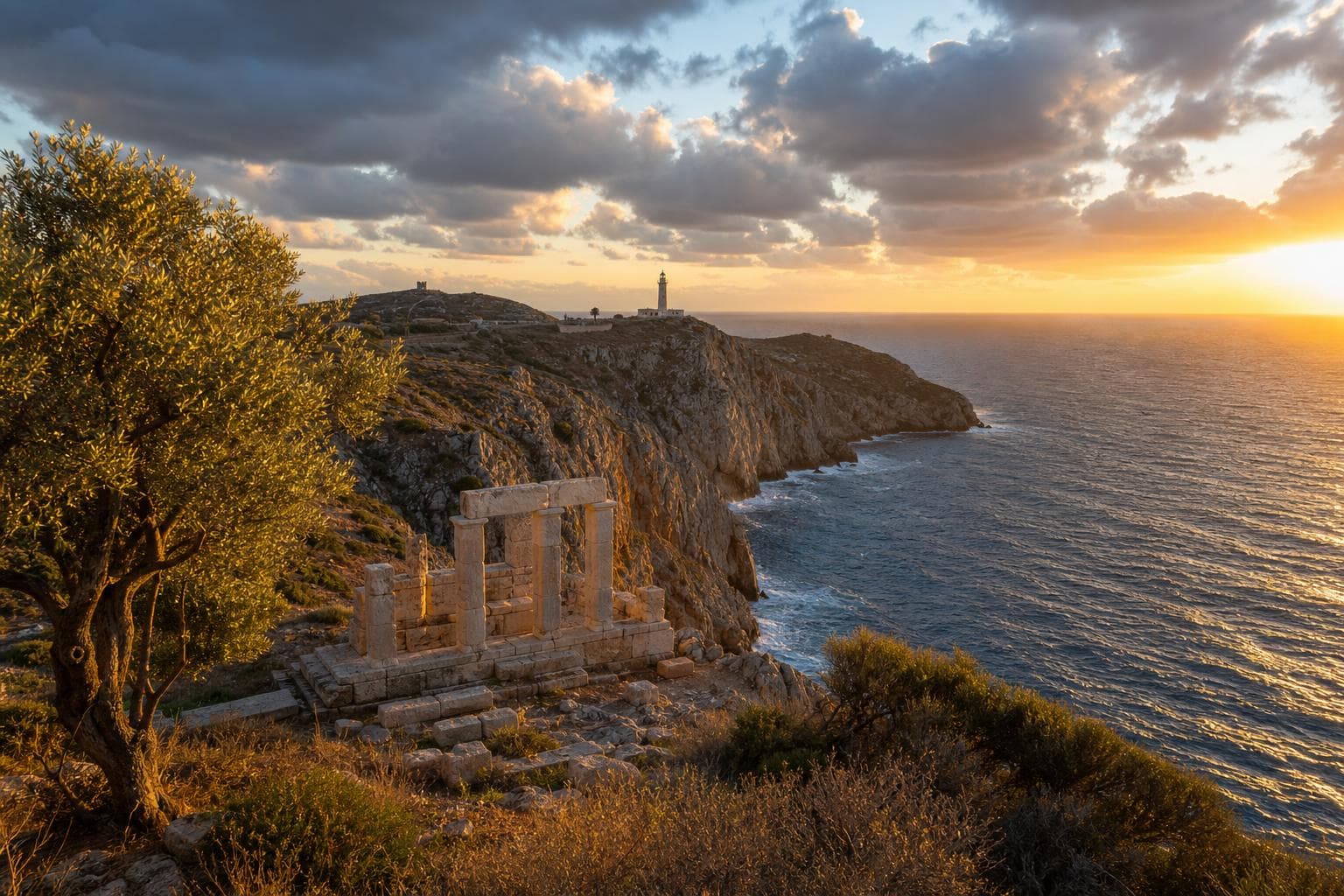
Cape Tenaro, known to many as Cape Matapan, is the southernmost tip of mainland Greece, where the rugged Mani Peninsula finally surrenders to the sea. This is a landscape of stark beauty: dry stone walls, ancient tower houses, and wild coastline that has changed surprisingly little in millennia. But what draws the curious traveler here is not just the dramatic geography, it is the weight of history and mythology that hangs over this place. The Tainaro Archaeological Site preserves the ruins of a sanctuary dedicated to Poseidon, and ancient tradition held that one of the entrances to the Underworld lay somewhere beneath these cliffs. Standing on the wind-scoured rocks at the edge of the cape, with nothing but open water between you and Africa, you understand why the ancients believed this was a boundary between worlds.
Things to Do
The Tainaro Archaeological Site is the essential stop, the scattered remains of the Sanctuary of Poseidon sit on a windswept plateau just above the sea. The stone foundations and fragments of ancient walls are modest, but their setting is extraordinary, and the site's significance in ancient Greek religion gives even the ruins a powerful presence. The nearby lighthouse at Cape Matapan, one of the oldest in Greece, still marks the treacherous meeting point of the Aegean, Ionian, and Mediterranean seas, the views from the approach road are worth the drive alone. The village of Porto Kagio, tucked into a sheltered cove just east of the cape, offers a quiet place to swim and eat fresh seafood after the archaeological walk. For those with time, the hike from Kokkinogia to the cape itself is a rewarding route along an old path that follows the spine of the peninsula, passing abandoned settlements and offering constant sea views on both sides.
The Gate to the Underworld
To the ancient Greeks, Cape Tenaro was a literal entrance to the underworld. A sea cave here was held to be one of the gates to Hades, guarded by Cerberus, the many-headed hound. On the site stood a Necromanteion, an oracle of the dead, where people came to summon and question the souls of the departed. It is the mythological end of the world, set at the physical southern end of mainland Greece, the tip of the Balkan Peninsula.
What's Actually There
The Sanctuary of Poseidon's cut stones were later reused to build the small Byzantine chapel of Agioi Asomatoi, which still stands by the trailhead. Nearby sits the Cave of Hades, the sea cave behind the underworld myth; its exact "gate" was never pinned down, which is part of the pull. About 500 m from the parking area, a 1st-century AD Roman floor mosaic survives, the trace of a Roman settlement that once stood here. The 19th-century stone lighthouse at the very tip, restored in 2008, is the turnaround point and the widest view on the cape. The headland also lent its medieval name, Cape Matapan, to the 1941 naval battle fought offshore, one of the Royal Navy's decisive Mediterranean victories of the war.
Best Time to Visit
Late spring through early autumn is the ideal window. May and June offer the best balance, warm enough for swimming, wildflowers still blooming in the hills, and the summer crowds have not yet arrived. July and August bring intense heat and little shade; start early if you plan to walk the archaeological site. September remains excellent, with the sea at its warmest and the light softer than in high summer. Winter visits are possible but raw, the wind at the cape is fierce, and many local tavernas and small guesthouses close between November and March.
Where to Stay
The Mani Peninsula does not have conventional resort accommodation. The nearby villages of Kokkinogia and Porto Kagio have small pensions and family-run rooms, though booking ahead is wise in summer. Many travelers base themselves in Areopoli, the traditional capital of the Mani about 30 minutes north, where there are more options including small hotels and guesthouses with stone architecture that mirrors the landscape. Gytheio, a pleasant port town about an hour away, offers a wider range of accommodation if you prefer to day-trip to the cape.
Budget: Akrotainaritis Hotel, family-run rooms in Porto Kagio bay, a short drive from the lighthouse trailhead.
Mid-range: Kyrimai Hotel, a converted 19th-century trading complex on the harbor at Gerolimenas, all stone and sea views.
Luxury: Tainaron Blue Retreat, restored Maniot tower in Vathia, regularly listed among Greece's most distinctive small hotels.
These are affiliate links — booking through them supports Viator Modus at no extra cost to you. Same room, same price, it just helps keep the guides coming.
Getting Around
A car is essentially required for the Mani. The KTEL bus from Athens reaches Kalamata and Gytheio, but getting to Cape Tenaro itself involves narrow, winding roads that are poorly served by public transport. The drive from Areopoli to the cape takes about 30 minutes along a dramatic coastal road. Parking at the archaeological site is limited but usually manageable outside peak season. The hike from the road to the sanctuary ruins and the cape itself is on rough ground, sturdy shoes and water are necessary, and there is no shade along the way.
How to Visit
The paved road ends at the village of Kokkinogia, and the last stretch to the lighthouse is on foot: about 2 km, 30 to 50 minutes each way, on a rocky, uneven, exposed path. Wear proper shoes and carry water, a hat, and sun cover — there is no shade. Time it for late afternoon, when the walk ends at the lighthouse with the light going down over open sea.
A guided day trip from Areopoli is the simplest way to reach the cape without your own car, and it pairs the point with the wider Mani.
Recommended Experiences
Hidden Gems
The underground cave near the sanctuary, known in antiquity as the Nekromanteion or entrance to Hades, is not signposted for casual visitors, but local knowledge and careful reading of archaeological literature can guide you to its approximate location. The stone tower houses scattered through the inner Mani, many now abandoned, are unique to this region and some of the finest examples of defensive vernacular architecture in Greece; a detour into the villages of Vathia or Kita rewards the curious. And the coves between Porto Kagio and Kokkinogia hide small beaches where you may not see another soul even in midsummer, bring your own supplies, as there are no facilities.
Found this useful?
If this guide helped plan your trip to Cape Tenaro, you can help fund the next one.
Buy me a coffee →