Europe
The first Roman colony in Gaul, a Roman road you can still walk on, and a cathedral that was never finished. The forgotten Roman capital of southern France that everyone drives past.
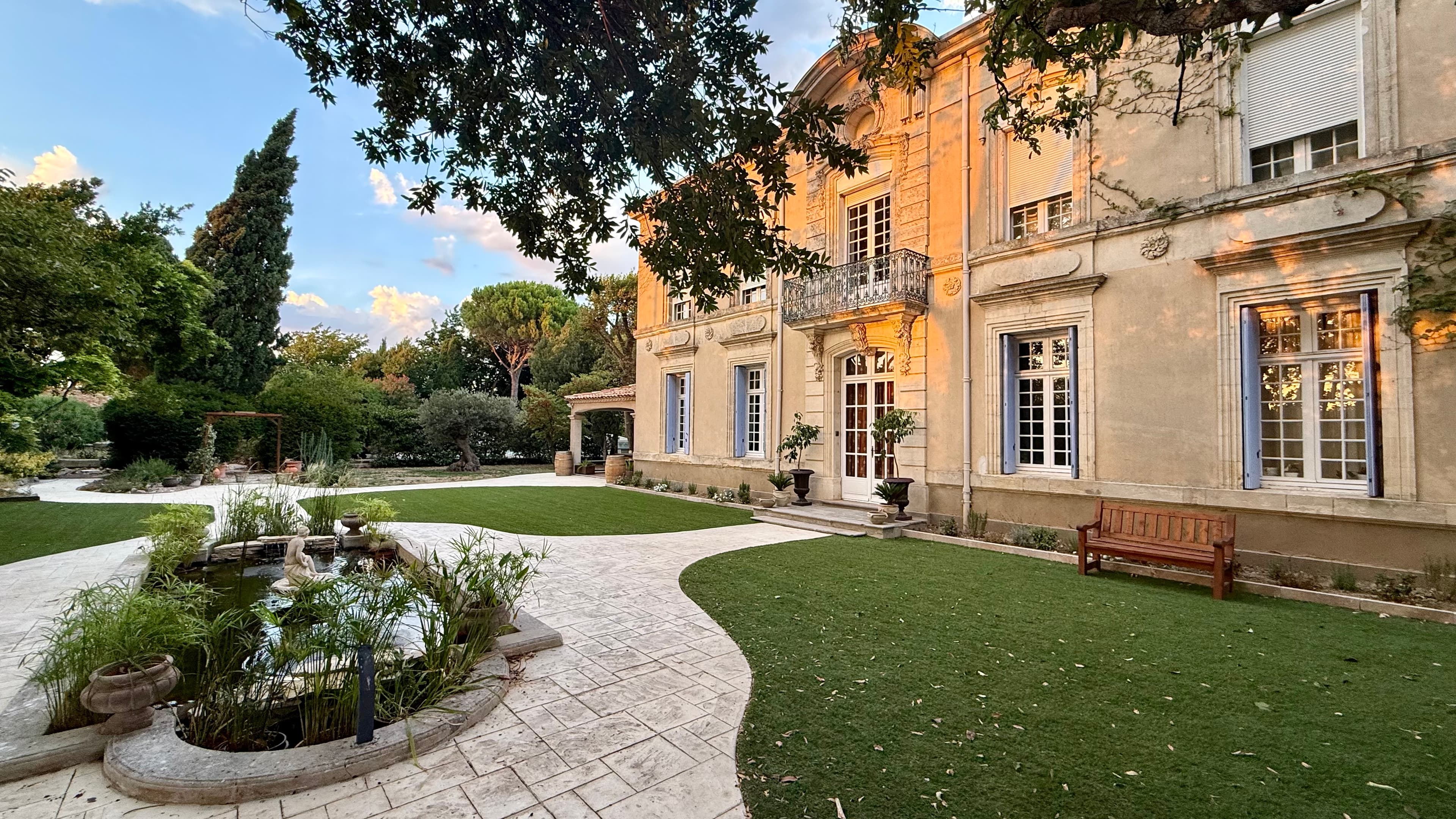
Scenes from Narbonne and the Minervois wine country, captured on my trip.
Everyone has a version of the south of France in their head. Lavender fields, the Riviera, Provence, a glass of rosé on a terrace. Almost nobody's version includes Narbonne, and that is the mistake. Two thousand years before the south of France became a postcard, Narbonne was the capital of it.
I based myself in Ginestas, a small village in the Minervois wine country, and came into Narbonne on a Sunday before catching the train north to Lyon. What I found was a city that was once one of the most important places in the Roman world, sitting almost completely overlooked in a corner of France that everyone drives past on the way to somewhere else.
Here is the case for stopping.
Why was Narbonne one of the most important cities in Roman Gaul?
Start with the founding date: 118 BC. That year Rome established Narbo Martius, the first Roman colony in all of Gaul outside Italy itself. This was Rome planting its flag in what would become France, and Narbonne was the flag.
It grew into the capital of an entire Roman province, Gallia Narbonensis, which was named after the city. The Romans did not name the region after a river or a tribe. They named it after Narbonne. At its height it was a major Mediterranean port, its harbor busy enough to rival Massilia, modern Marseille, further up the coast. Augustus made it the administrative heart of Roman southern France, and the wealth followed.
Today it is a quiet market town of around fifty thousand people. That gap, between what it was and what it is, is the whole reason to come.
Can you still walk on the Via Domitia in Narbonne?
You can, and it sits in the middle of the main square. The Via Domitia was the first Roman road built in Gaul, laid in 118 BC to connect Italy to Hispania across the south of France. Narbonne grew up on it.
A section of the original road was unearthed in 1997 and left exactly where it was found, in the center of Place de l'Hôtel de Ville, in front of the old Archbishops' Palace. These are the actual paving stones, worn by Roman carts, sitting open to the sky in a modern French square. I walked across it on my way to the Sunday market without at first realizing what it was. Most people do. Stop and stand on it. You are on the oldest Roman road in France.
Why is Narbonne's cathedral unfinished?
The Cathedral of Saint-Just-et-Saint-Pasteur is one of the strangest great buildings in France, because it stops mid-sentence. Construction began in 1272, commissioned by Pope Clement IV, himself a former Archbishop of Narbonne, who wanted a cathedral to rival the giants of the north.
They built the choir first, and it is staggering: the vaults rise to 41 meters, the fourth-highest of any cathedral in France and the tallest in the entire south. Then they stopped. To build the nave, the city consuls would have had to tear down Narbonne's old defensive ramparts to supply the stone, and with the Hundred Years' War looming they refused. The nave was never built. What stands today is a soaring Gothic choir attached to almost nothing. You walk in expecting a full cathedral and find the most ambitious fragment in France, frozen at the exact moment history got in the way.
What is the best way to eat in Narbonne?
Go to Les Halles. Narbonne's covered market opened in 1901, a cast-iron and glass hall built in the Baltard style, the same architectural language as the old market pavilions of Paris. In 2022 it was voted the most beautiful market in France, and it earns the title. Around seventy stalls sell the produce, cheese, fish, and wine of the Aude, and it opens every single day of the year without exception.
The move is to come hungry and eat at the counter. At Chez Bebelle, orders are shouted across the hall and the meat is carried straight from the butcher's stall beside it. On Sundays the indoor market spills outdoors along the Canal de la Robine, itself a UNESCO World Heritage waterway and an offshoot of the Canal du Midi that runs straight through the center of town. I did the Sunday market and Les Halles back to back before my train. Do the same.
Is the Minervois wine country worth the detour?
Yes, and it is where I stayed. The villages north of Narbonne sit in the Minervois, a wine region running between the Canal du Midi and the Black Mountain that has grown vines since Roman times. It was formally classified in 1985 and produces mostly bold reds from Syrah, Grenache, and Mourvèdre, often at a fraction of the price of France's better-known regions.
I based myself in Ginestas and visited Château du Puits es Pratx and Château de Paraza. Paraza carries the best story in the region. When Pierre-Paul Riquet was building the Canal du Midi in the 17th century, the vast project that connected the Mediterranean to the Atlantic and is now a UNESCO site, he lived at the Château de Paraza during construction. To thank the family that hosted him, he built a series of seven terraces descending from the château all the way down to his canal. You can taste their wine on that same ground today.
Where to stay in Narbonne
Stay in the Cité, Narbonne's medieval core, and the cathedral, the Archbishops' Palace, Les Halles, and the Via Domitia are all within a few minutes on foot. If you would rather use the town as a base for the wine country, a village like Ginestas puts you in the middle of the Minervois with Narbonne a short drive away. The town also sits on the main rail line, which is how I left it, a few hours north to Lyon.
Use the map below to compare stays in the old town and the surrounding Minervois villages.
These are affiliate links — booking through them supports Viator Modus at no extra cost to you. Same room, same price, it just helps keep the guides coming.
Found this useful?
If this guide helped plan your trip to Narbonne, you can help fund the next one.
Buy me a coffee →