Europe
A thousand-year-old capital that survived both world wars almost untouched, keeps the oldest working astronomical clock on Earth, and sits at the end of the road that invented pale lager. Here is how to do Prague properly.
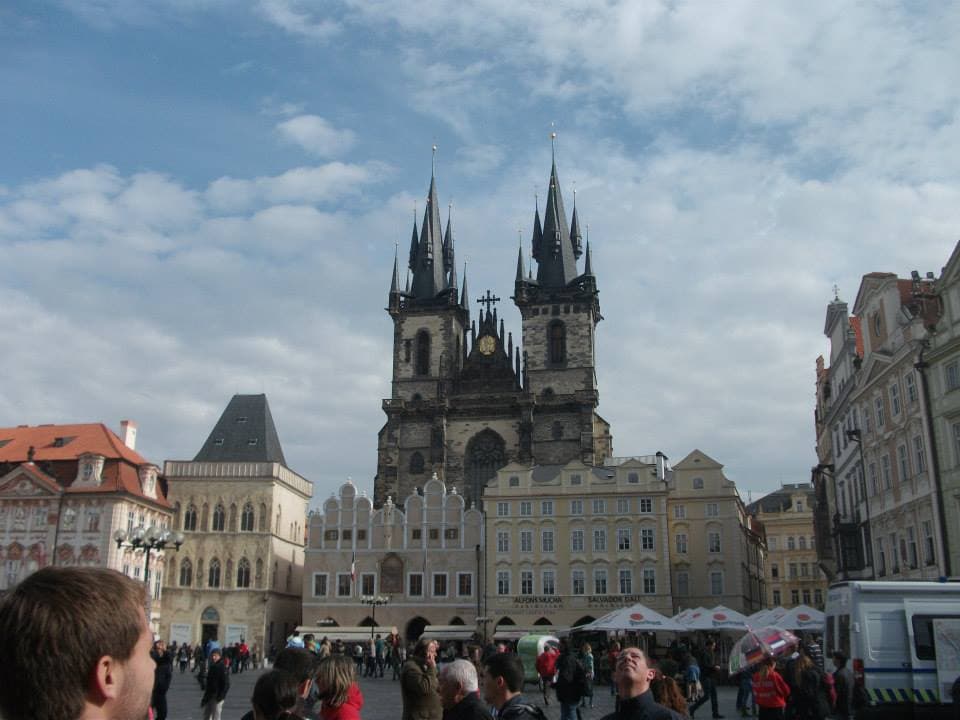
Scenes from Prague, from St. Vitus Cathedral to a night out and the slow train through Bohemia, captured on my trip.
Most people give Prague a long weekend, spend it shoulder to shoulder on Charles Bridge, and leave thinking they saw it. They didn't. This is a thousand-year-old imperial capital that came through both world wars almost untouched, keeps the oldest working astronomical clock on Earth, and sits at the far end of the road that gave the world the beer style now in roughly seven of every ten glasses poured. I came in the slow way, by train from Bavaria through the Bohemian brewery towns, and it turned a city break into something closer to a pilgrimage. Here is how to do Prague properly.
Why should you arrive in Prague by train through Bohemia?
The fastest way into Prague is a cheap flight. The best way is the train from Bavaria. Coming from Bamberg, the line runs through Cheb, a Bohemian border town where German and Czech history have been overlapping for a thousand years, then on to Plzeň. That second stop matters more than its size suggests. In 1842, the citizens of Plzeň (Pilsen in German) were so fed up with their sour, inconsistent beer that they built a new brewery, hired a Bavarian brewmaster named Josef Groll, and effectively invented the pale lager. They called it Pilsner Urquell, which means "the original source." Every crisp golden lager you have ever had traces back to that one brew. By the time you roll into Prague, you have already passed through the origin story.
What is the Astronomical Clock, and why is everyone staring at a wall?
On the south wall of the Old Town Hall hangs the Orloj, installed in 1410. It is the third-oldest astronomical clock ever built and the oldest one still running, which means it has been tracking the sun, the moon, and the zodiac for more than 600 years. Every hour a short show called the Walk of the Apostles plays out: figures rotate past two windows, and a skeleton representing Death pulls a rope to strike the time. Here is the honest part most guides leave out. The hourly show is brief, and for most people it is a mild letdown. The real reward is the mechanism itself and the climb up the Old Town Hall tower for the best rooftop view in the center. Watch the show once, then go up.
Is Prague Castle actually the largest in the world?
Yes, and it is not close. Guinness lists Prague Castle as the largest coherent ancient castle complex on Earth, roughly 70,000 square meters, founded in the 9th century. It is less a castle than a walled city of palaces, churches, and courtyards, and it is still the official seat of the Czech president. The centerpiece is St. Vitus Cathedral, begun in 1344 under Charles IV and not finished until 1929. That is nearly 600 years of construction. Inside, the Bohemian Crown Jewels sit behind a door secured with seven separate locks, the St. Wenceslas Chapel is studded with more than 1,300 semi-precious stones, and one of the stained glass windows was designed by Art Nouveau master Alfons Mucha. Go right at opening or in the last hour before closing. Midday is a scrum.
What should you know before you cross Charles Bridge?
Charles IV laid the first stone of Charles Bridge in 1357 and handed the work to his cathedral architect, Peter Parléř. It runs 621 meters across 16 arches and connects the Old Town to the castle side of the river. The 30 baroque saints lining the parapet came about 300 years after the bridge itself, starting with a bronze St. John of Nepomuk in 1683, and nearly all of them are now replicas, with the weathered originals moved indoors for protection. Two tips. First, the bridge at dawn is nearly empty and the light is at its best; by mid-morning it is wall to wall. Second, the plaque at the St. John of Nepomuk statue is polished gold from centuries of hands rubbing it for luck. Join in or don't, but that is what the crowd is reaching for.
Where do you actually drink in Prague?
Prague runs on beer, and the good news is that Czech beer is often cheaper than bottled water. Skip the tourist-trap terraces on the main square and hit these three, which together make one of the best nights out in Europe.
The PUB, short for Pilsner Unique Bar, puts a tap on your table and lets you pour your own unpasteurized Pilsner Urquell. A touchscreen tracks how much your table has poured and ranks you on a live leaderboard against every other table in Prague and across Europe. It turns a quiet round into a competition fast. This is where the Pilsen story from the train pays off, poured straight from the source.
Výtopna Railway Restaurant on Wenceslas Square delivers your drinks by model train. Fourteen computer-controlled locomotives run 900 meters of track around the room and pull up to your table with your order. It is a gimmick, it knows it is a gimmick, and it is genuinely fun for the first twenty minutes.
Karlovy Lázně is the largest music club in Central Europe: five floors, five different genres, from oldies on one level to techno on another, inside a 15th-century building that was once a public bathhouse (the name means "Charles' Baths"). There is an ice bar where the walls, seats, and glasses are all carved from ice. It opened in 1999, and it is still where most of the city's pub crawls end up around 1am. Yours probably will too.
How many days do you need in Prague?
Three days is the sweet spot. Day one: the Old Town, the Astronomical Clock, and the Jewish Quarter. Day two: cross Charles Bridge early, give the castle and cathedral a full half day, then wander Malá Strana below it. Day three: slow down. Take a Pilsner Urquell brewery day trip out to Plzeň, or spend the afternoon in Vinohrady where locals actually live. Anything less than three days and you are only getting the postcard version.
When is the best time to visit Prague?
May and September are the two best months: warm enough to be outside all day, and without the July crush. Summer is peak crowds and peak prices. December is cold, but the Old Town Square Christmas market is one of the best in Europe if you can handle the temperatures. Outside of that, the dead of winter is worth avoiding, when the daylight is short and the river wind cuts.
How do you get around Prague?
The historic core is small and walkable, and the cobblestones make it more of a stroll than a hike. For anything farther out, the tram and metro network is clean, cheap, and easy, and a single ticket covers all of it. Buy tickets from machines or the PID Lítačka app and validate them when you board. Street-hailed taxis have a reputation for overcharging tourists, so use Bolt or Uber instead.
Where should you stay in Prague?
Staré Město (Old Town) puts you in the middle of everything, but you pay for it and you sleep above the noise. Malá Strana, under the castle, is quieter and arguably prettier. For better value and a genuinely local feel, base yourself in Vinohrady, a leafy residential district a short tram ride from the center with the city's best cafés and wine bars. Use the map below to compare neighborhoods and what a night costs across each.
These are affiliate links — booking through them supports Viator Modus at no extra cost to you. Same room, same price, it just helps keep the guides coming.
What tours are worth booking in Prague?
A few things are worth booking ahead, either to skip the lines or to go deeper than you could on your own.
Recommended Experiences
Just across the border in Franconia, read next: my guide to Bamberg, Germany's smoked-beer capital.
Found this useful?
If this guide helped plan your trip to Prague, you can help fund the next one.
Buy me a coffee →