Middle East
A 30-hour layover in the Gulf's least-touristed capital: a 200-year-old souk, a water tower that became a national symbol, the pearl-diving history under it all, and two war memorials most travelers never see.
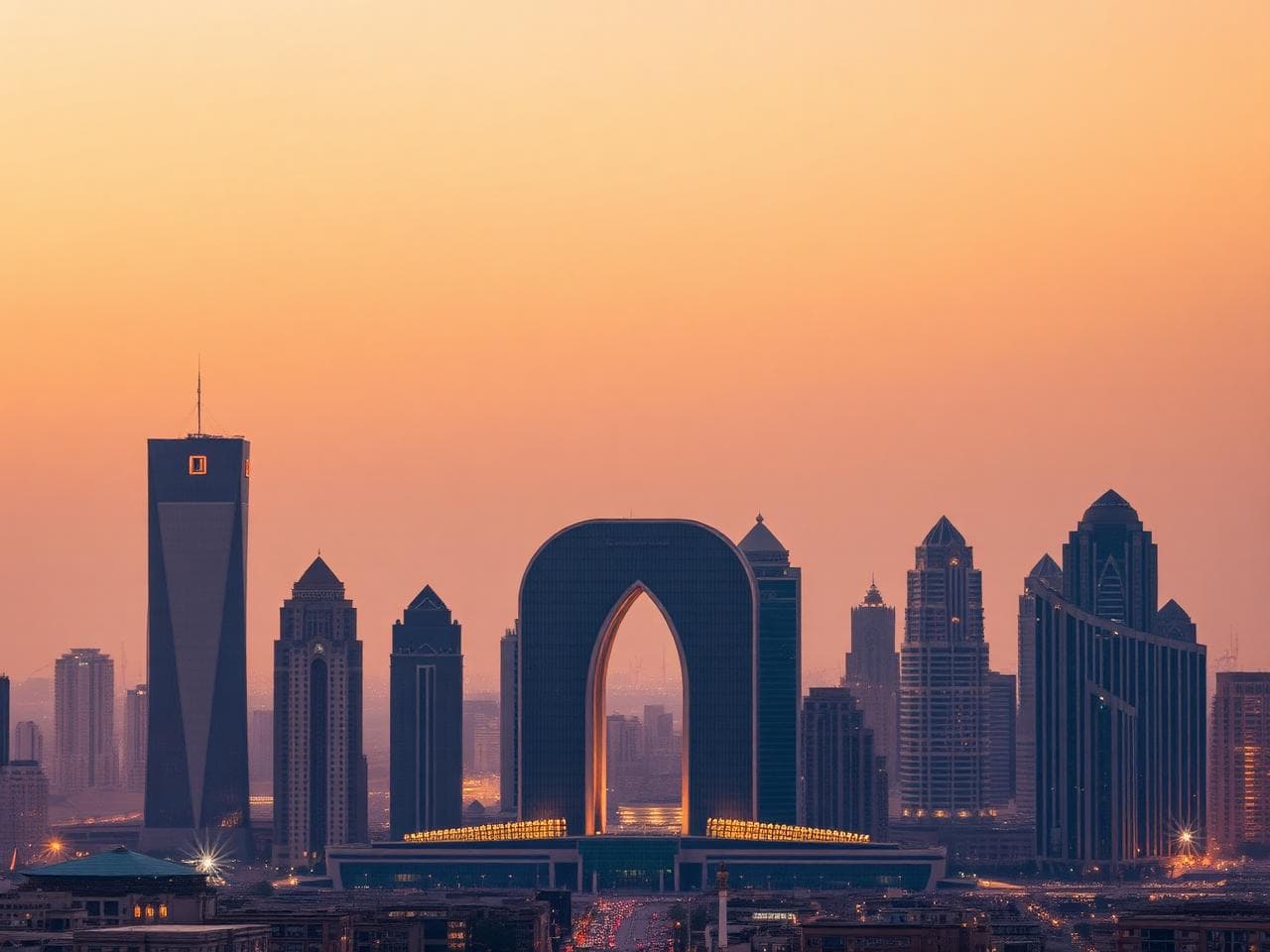
Thirty hours in Kuwait City, from the Kuwait Towers to the Gulf-front skyline, captured on my trip.
Kuwait City's most famous landmark is not an oil derrick. It is a water tower. That one fact tells you most of what makes this city worth a stop: a place that turned scarcity into a national symbol, and that most travelers skip entirely. Its Gulf neighbors chase tourists. Kuwait pulls a fraction of them, which is exactly why it still reads as a working city instead of a showroom.
I had 30 hours here on a layover and used all of them. Here is what to do with the time, the history that makes it worth doing, and the two places that show you what this country survived.
A note on timing
I visited at the end of August 2026. As our plane taxied out, the news broke that the US had struck Larak Island in the Strait of Hormuz. Within days, Iran fired missiles and drones toward Kuwait, which Kuwaiti air defenses intercepted. We left as the region was escalating. If you are planning a trip, check your government's current travel advisory before you book; Farhaven puts the US and UK advisories in one place. Everything below is written for a calmer moment, and Kuwait deserves one.
From little fort to oil state
The name says what the place was. "Kuwait" comes from kout, Arabic for "little fort." Clans of the Bani Utub settled this stretch of coast in the early 18th century, and the Al Sabah family has ruled since around 1752. For its first two centuries this was a maritime town, not a petro-state: pearl diving, boat building, and caravan trade that moved goods between India, East Africa, and the Ottoman interior.
Pearls were the engine. Kuwaiti crews worked some of the richest oyster banks in the Gulf through the summer diving season, and pearls stayed the emirate's main export until the 1930s, when the Great Depression and cheap Japanese cultured pearls collapsed the market in a few years. Then oil arrived, and the timeline compresses into something almost unbelievable. The walled town of five gates (the wall came down in 1952) became one of the wealthiest nations on Earth per capita inside a single generation. Britain ran Kuwait's foreign affairs from 1899 until independence in 1961.
Then came 1990. On August 2, Iraq invaded and annexed Kuwait, occupying the country for roughly seven months until a US-led coalition drove Saddam Hussein's forces out in February 1991. That war is not an abstraction here. It is preserved, deliberately, in two places worth going out of your way for. But first, the older city.
Souk Al-Mubarakiya
Start here, because the rest of the country grew out of it. Al-Mubarakiya is more than 200 years old and was the commercial heart of Kuwait long before oil, named after Sheikh Mubarak Al-Kabeer. This is where pearl money changed hands. The alleys still sell Persian carpets, oud and musk, gold, dates, and spices, with open-air cafes brewing tea over coals and small museums tucked inside, including the site of Kuwait's first pharmacy. The souk was badly damaged during the 1990 occupation and rebuilt afterward, which is part of why walking it now feels like an argument for continuity and not just a shopping trip. Go in the late afternoon, when the heat breaks and the stalls fill.
Kuwait Towers
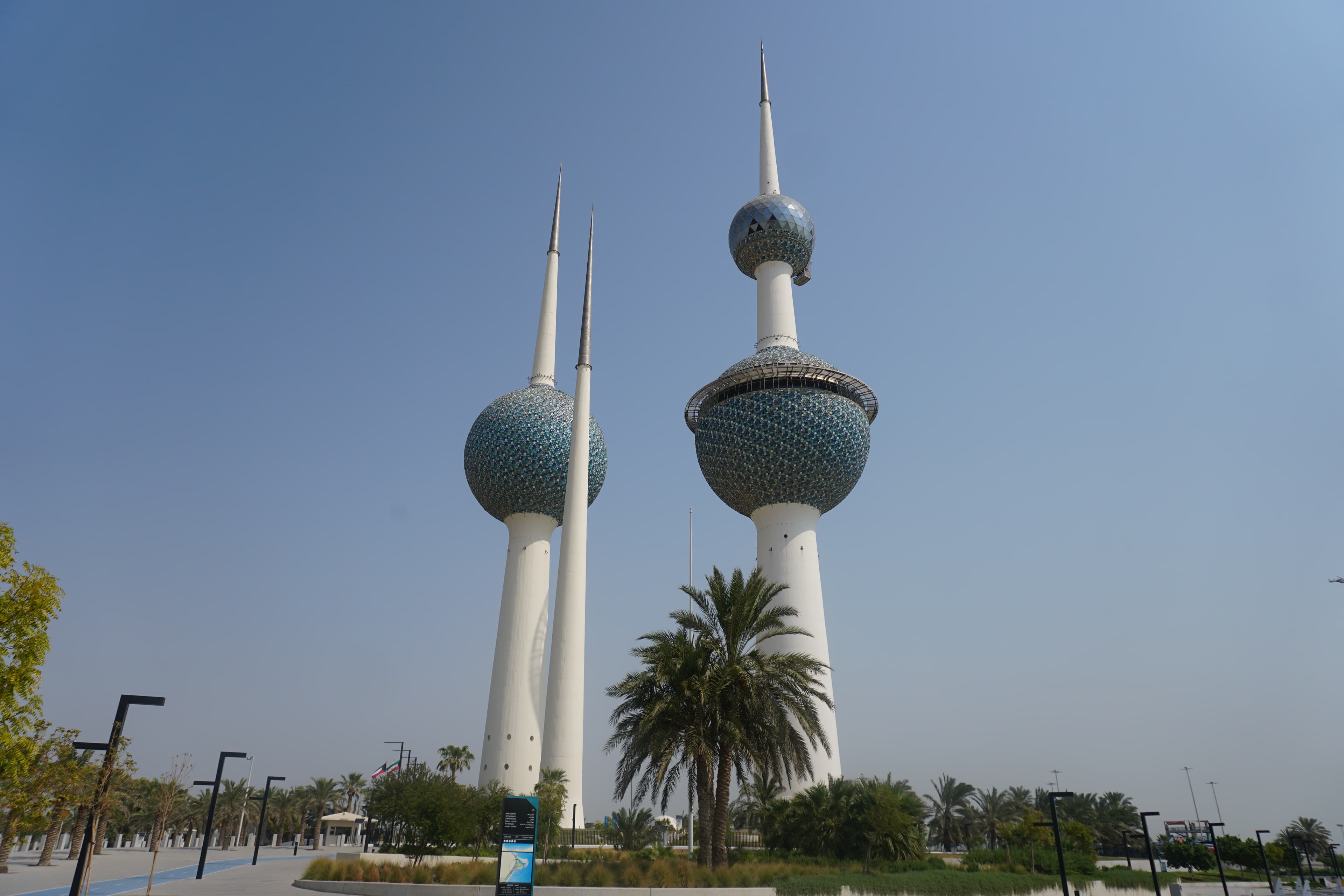
Kuwait's icon is a water tank, and that is the entire point. The three towers were designed by Danish architect Malene Bjorn, completed in 1976 and opened to the public later that decade. The main tower rises 187 meters and is skinned in roughly 41,000 enameled steel disks in blue, green, and grey, a deliberate echo of the tiled domes of old mosques. The upper sphere holds an observation deck that makes a full rotation every half hour, giving you the whole city, the Gulf, and the tanker traffic in one slow turn. They are part of a larger network of 34 towers built to store water in a country with almost no natural fresh supply. Building your most beautiful landmark as a reservoir is not decoration. It is a statement about what actually keeps a desert city alive.
The war you can still walk through: Al-Qurain Martyrs Museum
About 20 minutes southeast of downtown, in an ordinary suburban neighborhood, sits an ordinary-looking house that Kuwait chose never to repair. On February 24, 1991, days before liberation, 19 members of a Kuwaiti resistance cell called the Al-Messilah group were inside preparing to support the incoming coalition. An Iraqi patrol approached. A soldier climbed the wall, and a fighter inside shot him. Iraqi forces came back with tanks and armored vehicles and surrounded the house.
What followed was a ten-hour battle between lightly armed young men and a tank line. Twelve of the 19 were killed. Seven survived by hiding under the rubble. Kuwait's ruler later decreed the house be preserved exactly as the fighting left it, and it opened as a museum in 2003. The walls are still torn open by tank rounds, beams still hold up the ceilings, and the Iraqi vehicles still sit outside. It is one of the most affecting war memorials in the Gulf, and almost no layover tourist knows it exists.
Failaka Island
For the longer version of the same story, take the ferry to Failaka, about 20 kilometers off the coast. Failaka has been inhabited since the Bronze Age, drawn to its freshwater springs as early as 2500 BC, and it carries a past you would not expect this far up the Gulf. Greeks who arrived in the era of Alexander the Great settled and traded here and named the island Ikaros. It remains the most significant archaeological site in Kuwait.
Then 1990 froze it. The island's roughly 2,000 residents fled or were expelled during the invasion, and around 1,400 Iraqi troops turned it into a base until coalition forces retook it in February 1991. The Iraqis mined the beaches and used the town for target practice, and the Kuwaiti military kept training there afterward. What is left is a genuine ghost town: a school and mosque stippled with bullet holes, the shelled-out National Bank of Kuwait building, and rusting tanks and military vehicles collected in the open. A Bronze Age island with a Greek past, emptied by a modern war. There is no more Viator Modus place in the country. It needs a dedicated half or full day, so build a real trip around it rather than squeezing it into a layover.
The modern city in a day
The rest of my time went to present-day Kuwait. I based myself in Sharq, the central waterfront district, and it made the whole city easy to reach. Dasman Beach gives you the Gulf and the skyline in a single frame. Assima Mall is the air-conditioned reset that every Gulf summer demands. I closed the night at 34Floor for shisha, trading the souk's history for the other half of the story: the oil-funded high-rise skyline that grew up next to it in one lifetime. Old Kuwait and new Kuwait are a fifteen-minute drive apart, and doing both in a day is the point.
Planning a 30-hour layover
Thirty hours covers the souk, the towers, the beach, the skyline, and Al-Qurain without rushing. Save Failaka for a real visit. A few things I wish I had known:
- Stay in Sharq. It is central and made getting around simple.
- The airport pickup catch: Uber and Careem cannot collect you AT the airport. Arrange a transfer in advance or take a taxi on arrival. On the way out, both apps can drop you off with no issue.
- Summer heat is serious. Stack your outdoor stops (souk, towers, beach) into the morning and evening, and let the malls cover the middle of the day.
These are affiliate links — booking through them supports Viator Modus at no extra cost to you. Same room, same price, it just helps keep the guides coming.
Recommended Experiences
Found this useful?
If this guide helped plan your trip to Kuwait City, you can help fund the next one.
Buy me a coffee →