Middle East
A firsthand guide to Petra, the Nabataean rock city in southern Jordan: who carved it and how, the Treasury and the Monastery, how a desert capital survived with almost no water, and what to know before you walk it.
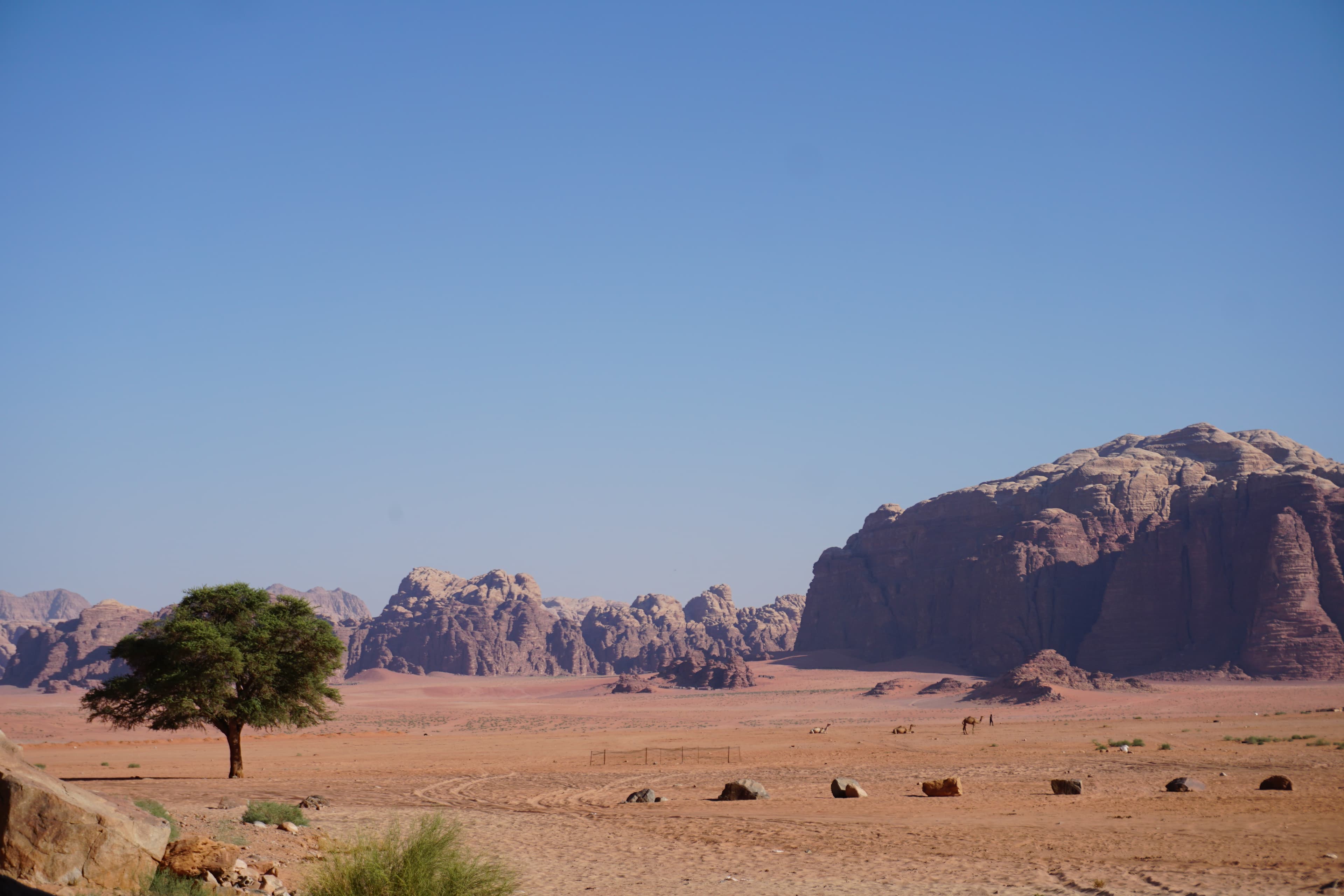
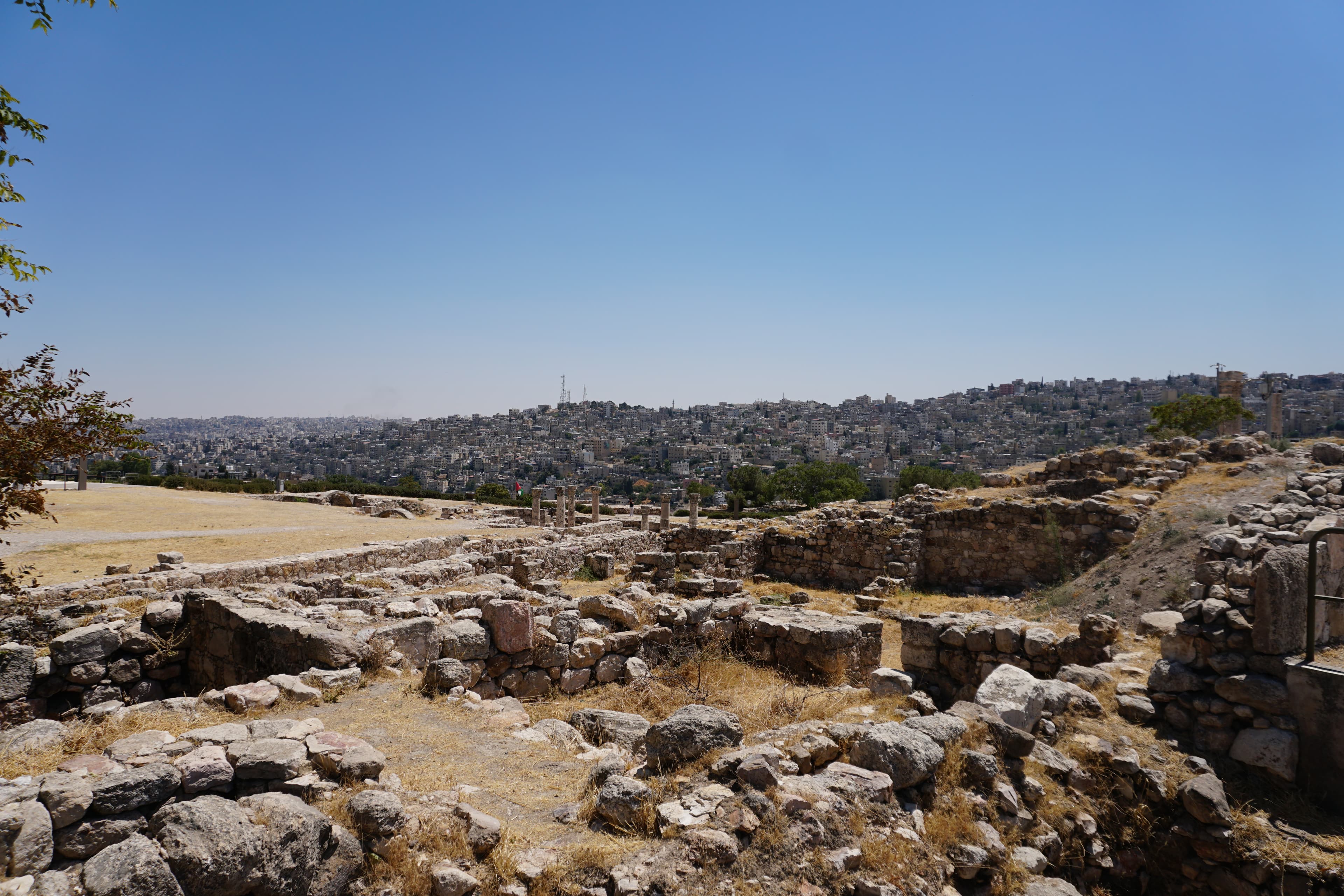
Scenes from Petra, from the Royal Tombs to the Monastery, captured on my trip.
Petra
We rented a car in Amman and drove about three hours south to spend two days walking Petra end to end, from the main gate to the Monastery and back. It was late August, which meant brutal heat and almost no shade, and the site was nearly empty. Regional conflict fears and the summer slowdown had cleared out one of the most visited places in the Middle East, so it's worth checking the current advisories for Jordan in Farhaven before you go. Petra is the fifth of the seven wonders of the world we have now stood in front of, and it is one of our favorites.
Who built Petra?
Petra was the capital of the Nabataeans, a nomadic Arab people who grew rich controlling the incense and spice routes that crossed Arabia. They knew the city as Raqmu. The name we use, Petra, is simply Greek for rock. At its height around the first century BC, this desert capital held an estimated 20,000 people and ranked among the wealthiest trading hubs of the ancient world.
How did the Nabataeans carve a city out of a cliff?
Every major monument in Petra was carved from the top down. Masons cut a staircase up the rock face, started at the top of the intended facade, and worked their way to the ground, so there was never any scaffolding to fail. The stone they cut into is the rose-red sandstone that gives Petra its color and its nickname.
How did a city survive with almost no water?
The Nabataeans were arguably the finest water engineers of the ancient desert world. They built a network of dams, ceramic pipes, channels, and cisterns that captured flash-flood rainwater and held it through the dry months, enough to supply tens of thousands of people and their trade caravans in a landscape that sees almost no rain.
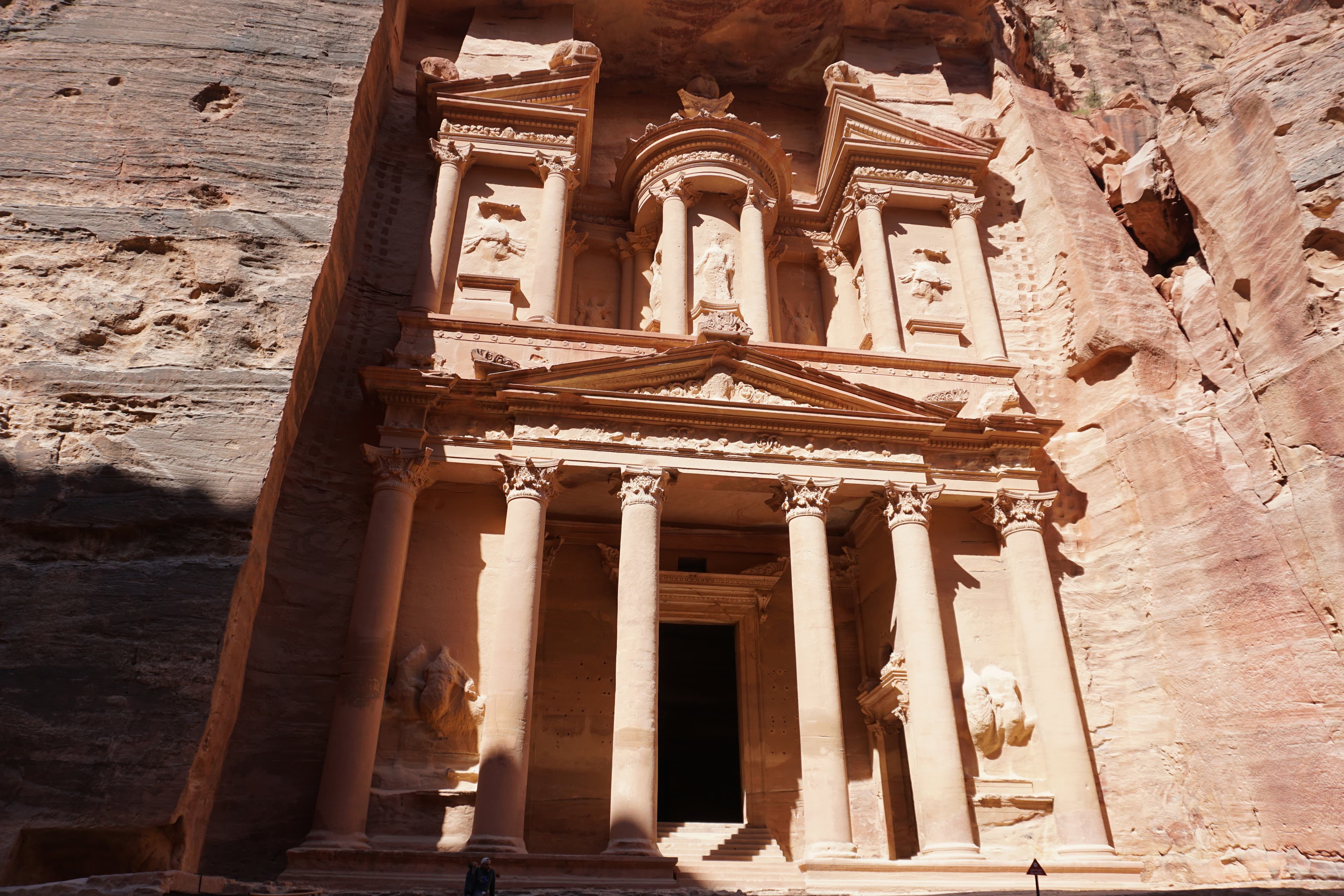
What is the Treasury?
The Treasury, or Al-Khazneh, is the facade that stops everyone cold at the end of the Siq, the narrow gorge that funnels you into the city. It stands around 40 meters tall and is thought to be the mausoleum of the Nabataean king Aretas IV. The name is a myth: local legend held that treasure was hidden in the stone urn at the top, but no one actually knows what the building was for.
Is the Monastery worth the walk?
Yes. We walked the full route to Ad-Deir, the Monastery, and back, and it was the single best thing we did in Petra. It sits at the top of roughly 800 rock-cut steps, and it is the largest facade in the entire city at about 47 meters high, with a doorway alone taller than a two-story house. Most day-trippers never make it this far, so you can often have the biggest monument in Petra nearly to yourself.
How was Petra lost and found again?
After a major earthquake in 363 AD and the slow death of its trade routes, Petra faded, and for centuries the Western world forgot it existed. It stayed known only to local Bedouin until 22 August 1812, when the Swiss explorer Johann Ludwig Burckhardt talked his way in disguised as a Muslim pilgrim. We visited on 23 August, almost exactly 214 years to the day after he rediscovered it. Even now, archaeologists estimate that up to 85 percent of Petra is still buried under the sand.
Petra is not the only place in the region where the ground rewrote the history books. Far to the north, the Areni, Armenia cave complex preserved the world's oldest known winery, pushing the origins of winemaking back more than 6,000 years.
When should you visit Petra?
Not in August, if you can help it. The heat is punishing with almost no shade on the main trail. The upside for us was solitude: between the regional tensions and the low summer season, we had stretches of the site to ourselves that would normally be shoulder to shoulder. Spring and fall are the sensible choice for weather.
What should you know before you go?
A few things we learned on the ground. Walk it if you can: donkey and cart rides are included in your ticket, but tipping the handlers is not, and we heard repeated stories of guides demanding anywhere from a few hundred up to 1,000 JOD after the fact, so walking kept things simple. Bring your own coffee and water, since you can buy both outside and carry them in, and BLK, a coffee shop right by the entrance, pours great coffee at fair prices before you start the day. Finally, eat at Grill afterward: this food truck up above town serves some of the best burgers at some of the most reasonable prices in the whole tourist zone, with a view worth the stop on its own.
Where should you stay near Petra?
These are affiliate links — booking through them supports Viator Modus at no extra cost to you. Same room, same price, it just helps keep the guides coming.
Found this useful?
If this guide helped plan your trip to Petra, you can help fund the next one.
Buy me a coffee →