Africa
Cape Town is the oldest city in South Africa, built around a mountain older than the Himalayas. The Dutch East India Company founded it in 1652 as a refreshment station for ships running between Europe and Asia, which is how it earned the names the Mother City and the Tavern of the Seas. Table Mountain sits inside the Cape Floristic Region, the smallest and richest of the planet's six floral kingdoms, while the V&A Waterfront launches boats to Robben Island, where Nelson Mandela was held for 18 of his 27 years in prison. I had three days here in 2010 for the first World Cup on African soil, and it was not enough.
Cape Town is the oldest city in South Africa, and the mountain at its center is older than almost every famous range on Earth. Most visitors give it three days and treat it like a beach stop. That undersells a place that was a working port two centuries before Johannesburg existed.
I had three days here in 2010, and I tried to see all of it.
How I got here: Charlotte to Cape Town, by way of a 49-meter statue
I won this trip from FIFA. Match tickets to the semi-final, airfare, and hotel, all of it. My mother and I made the long way down: Charlotte to Washington DC to Dakar to Johannesburg to Cape Town.
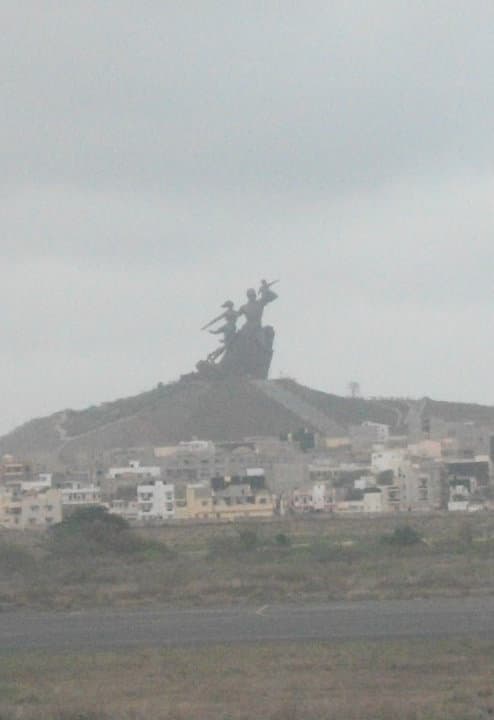
The Dakar leg is worth a paragraph on its own. Sitting on a hill above the Atlantic is the African Renaissance Monument, a bronze figure of a man, woman, and child that stands 49 meters tall. That makes it the tallest statue in Africa, taller than the Statue of Liberty's figure and taller than Christ the Redeemer. It was built by a North Korean state art studio and unveiled in April 2010, three months before the World Cup, to mark Senegal's 50th year of independence. You can take an elevator up into the man's head for a view across the city.
Table Mountain is older than the Himalayas
The cable car up Table Mountain is the easy way, and I took it. What you are standing on at the top is one of the oldest mountains in the world. Its age is commonly cited at around 260 million years, far older than the Himalayas, the Andes, or the Alps. The hard sandstone that caps it was laid down on an ancient seabed more than 450 million years ago.
The other reason the mountain matters is what grows on it. Cape Town sits inside the Cape Floristic Region, the smallest of the planet's six floral kingdoms and the richest. The strip of land from Table Mountain down to Cape Point holds more plant species than the entire United Kingdom, and roughly 70 percent of them grow nowhere else on Earth. The local name for that scrubland is fynbos.
The Mother City: founded as a pit stop for spice ships
Cape Town's nickname is the Mother City, and it earned it. In 1652 the Dutch East India Company (the VOC) set up a refreshment station here to resupply ships running between Europe and Asia. Sailors called it the Tavern of the Seas. That outpost became the first permanent European settlement in southern Africa, which is why Cape Town, not Johannesburg or Durban, is the country's oldest city.
The Castle of Good Hope, finished in 1679, still stands near the city center. It is the oldest surviving colonial building in South Africa.
Green Point, and the first World Cup on African soil
2010 was the first time the World Cup had ever been hosted on the African continent. In my opinion it is still the best version of the tournament, and it is not close. There was an African character to it that the editions since have never matched.
My ticket was for the first semi-final: Netherlands against Uruguay at Green Point Stadium on the edge of the Atlantic. The Dutch won 3 to 2 and went on to the final. The stadium sits in Green Point between Signal Hill and the sea, a short walk from the V&A Waterfront.
Camps Bay and the V&A Waterfront
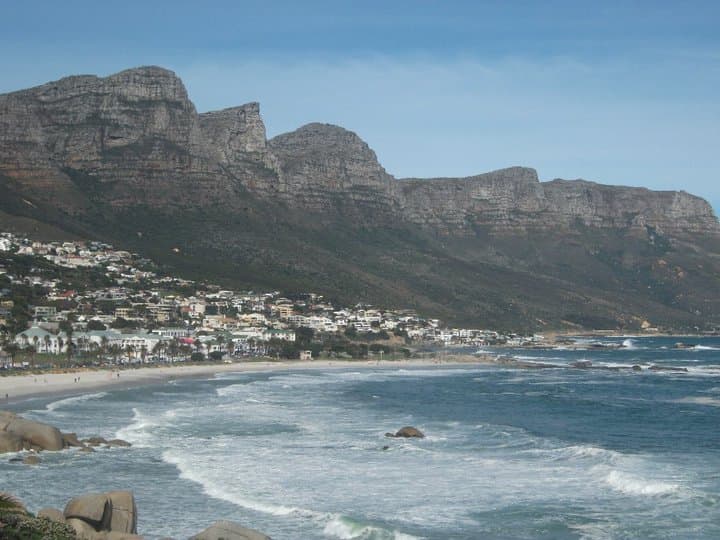
With the time we had left, we covered Camps Bay and the V&A Waterfront. Camps Bay is a run of white sand under the Twelve Apostles, the chain of buttresses that forms the back of the Table Mountain range. The V&A Waterfront is built around Cape Town's original working harbor, and it is the launch point for boats out to Robben Island, where Nelson Mandela was held for 18 of his 27 years in prison.
Three days is not enough for Cape Town. It was enough to know I will be back.
Where to Stay
The V&A Waterfront puts you next to the harbor, the Robben Island boats, and an easy walk to Green Point. Camps Bay trades that for the beach under the Twelve Apostles, and the City Bowl below Table Mountain keeps you central.
Budget: Once in Cape Town, a stylish boutique hostel on Kloof Street in Gardens, with private rooms, a rooftop pool, and Table Mountain views a short walk from the City Bowl's bars and restaurants.
Mid-range: The Cape Milner, a contemporary hotel in Tamboerskloof below Table Mountain, with a pool deck facing the mountain and an easy walk into the City Bowl.
Luxury: The Silo Hotel, built into the old grain elevator above the Zeitz MOCAA at the V&A Waterfront, with faceted glass windows looking over the harbor to Table Mountain.
These are affiliate links — booking through them supports Viator Modus at no extra cost to you. Same room, same price, it just helps keep the guides coming.