Asia
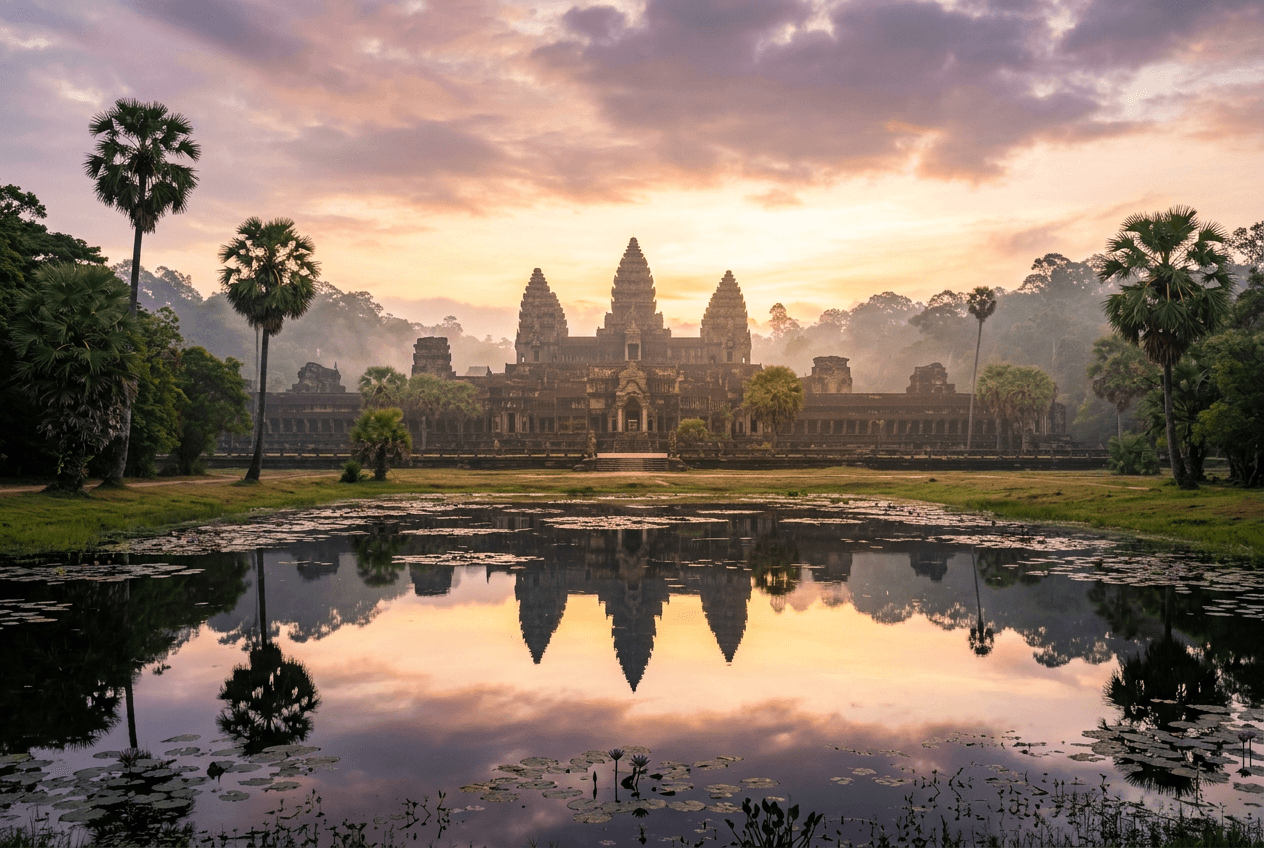
Angkor Wat is one of those places that somehow lives up to every photo you''ve ever seen of it, and then keeps going. Built in the early 12th century by King Suryavarman II, it''s the largest religious monument on the planet, and the surrounding Angkor Archaeological Park spreads across more than 400 square kilometres of jungle, moats and crumbling sandstone. You can spend three days here and still not see everything. I based myself in Siem Reap, woke up before sunrise more times than I''d like to admit, and came away convinced this is the most rewarding ancient site I''ve ever visited, bigger than Petra, more atmospheric than Tikal, and somehow still humming with active worship after nine centuries.
Things to Do
Watch sunrise at Angkor Wat from the left-hand reflecting pool, get there by 5am to beat the crowds for the prime spot. Explore Ta Prohm, the "Tomb Raider temple" where giant strangler fig roots have swallowed entire galleries. Climb to the top tier of Bayon in Angkor Thom to come face-to-face with its 200+ serene stone faces. Cycle the Small Circuit instead of taking a tuk-tuk on day two, it''s flat, shaded and the scale only really lands when you''re moving slowly. Visit Banteay Srei, an hour out of town, for the most intricately carved pink sandstone in the whole park. Save an afternoon for Beng Mealea, a half-collapsed temple swallowed by jungle that feels like proper exploration.
Best Time to Visit
November to February is the sweet spot, dry, sunny and cool by Cambodian standards, with temperatures around 25-30°C. December and January are peak season, so expect crowds at sunrise. I went in mid-November and got near-perfect weather without the full Christmas-week rush. Avoid March to May unless you genuinely enjoy 38°C heat radiating off sandstone. The green season (June-October) has fewer tourists, dramatic skies and the moats fill up beautifully, but afternoon downpours are guaranteed.
Where to Stay
Stay in Siem Reap, not at the temples, there''s no accommodation inside the park. The Wat Bo and Kandal Village neighbourhoods are calmer and more local than the Pub Street area, with great cafés and walkable streets. For boutique, FCC Angkor by Avani and Jaya House River Park are both excellent. Budget travellers will be spoiled, clean, well-run guesthouses with pools go for $20-30 a night. Wherever you book, ask about a free tuk-tuk transfer from the airport, most places throw it in.
Budget: Onederz Siem Reap, clean, social hostel with a rooftop pool a short walk from Pub Street.
Mid-range: FCC Angkor by Avani, riverside boutique in a restored colonial villa, central but quiet.
Luxury: Raffles Grand Hotel d'Angkor, the original 1932 grande dame, with vast gardens and a saltwater pool.
These are affiliate links — booking through them supports Viator Modus at no extra cost to you. Same room, same price, it just helps keep the guides coming.
Getting Around
The standard move is hiring a tuk-tuk driver for the day, around $20-25 for the Small Circuit, $30-35 for the Grand Circuit, more for outlying temples. Most drivers will happily do multi-day deals and become your unofficial guide. For Angkor Wat itself, distances are short and bikes (free or cheap at most guesthouses) are a great way to feel the scale. You need an Angkor Pass, buy it the day before at the official ticket centre, not at the temples. A one-day pass is $37, three-day is $62, seven-day is $72. The three-day is the sweet spot for most people.
Hidden Gems
Sunrise at Angkor Wat is iconic but mobbed, try sunrise at Srah Srang instead, a quiet royal bathing pool with almost no one there. For sunset, skip Phnom Bakheng (gets shut down by quotas) and head to Pre Rup, where you can climb the steep terraces and have laterite-red stone all to yourself. Banteay Kdei next door to Srah Srang is one of the most peaceful temples in the park and people walk straight past it. And in Siem Reap proper, the Phare Cambodian Circus is genuinely one of the best evenings I''ve had on the road, Cirque du Soleil-level performance run as a social enterprise training kids from disadvantaged backgrounds.