Europe
Most Tuscan towns gave up their walls centuries ago. Lucca never did. You enter through a Renaissance gate and explore the city from the top of its own fortifications, in a place that spent most of its history as an independent republic and still carries itself like one.
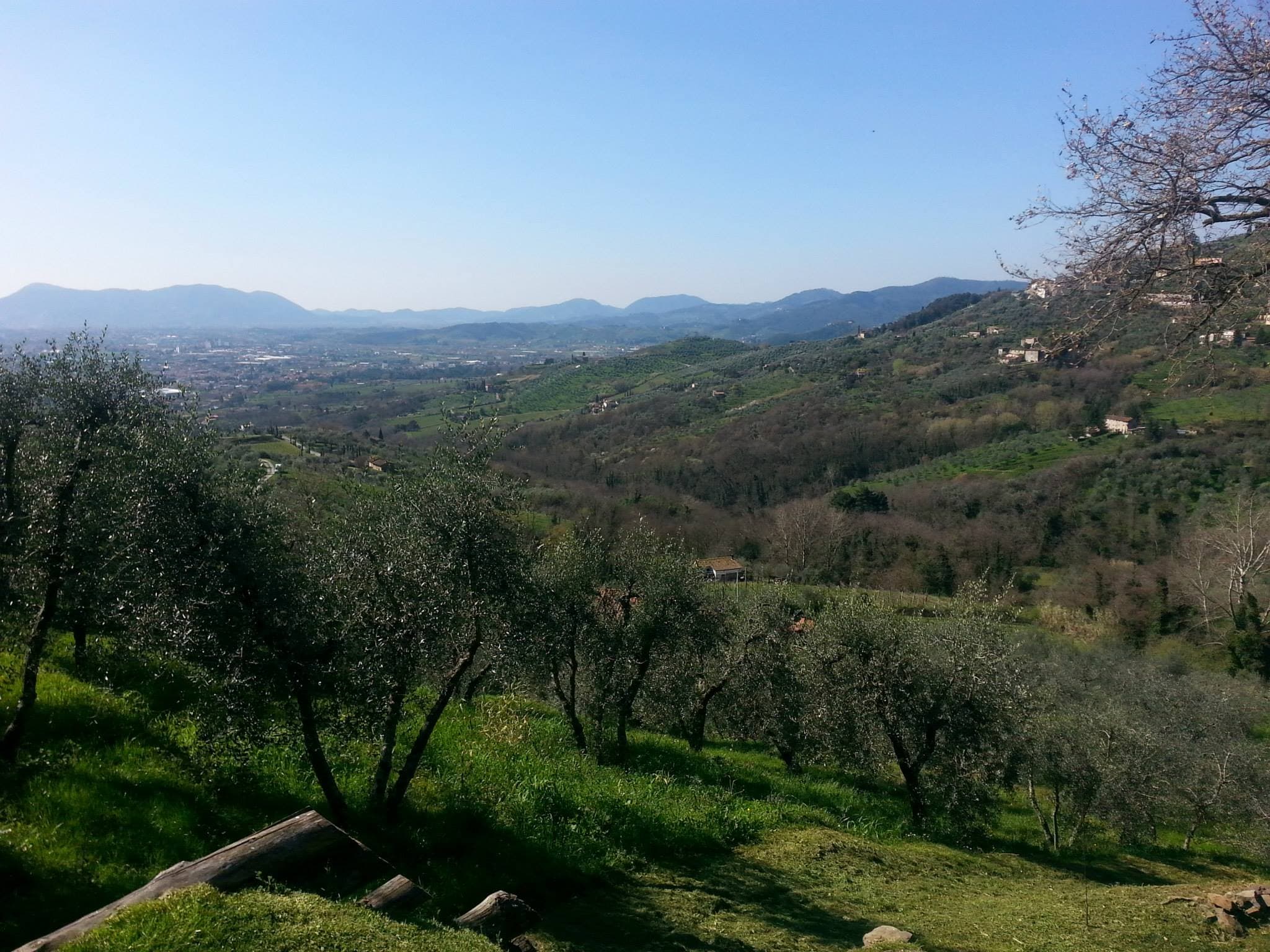
The olive grove at Forestaria in the hills above Lucca, captured on my trip.
The Walls (le Mura)
Lucca's walls are not a ruin you photograph from a distance. They are a 4,223 meter loop you walk, run, or cycle along the top of, shaded by close to a thousand trees. Built between 1504 and 1648, they are among the best preserved Renaissance fortifications in Europe, and the second largest fully walled Renaissance city still intact anywhere, after Nicosia in Cyprus. The strangest part is that they never saw a battle. Lucca built them bracing for an attack from Florence that never came, then in the 1820s turned the unused ramparts into a public promenade. Today the wall is the city's living room, and the evening stroll along it has its own name, la passeggiata.
The Oval (Piazza dell'Anfiteatro)
In the northeast corner of the old town is the reason most people remember Lucca. Stand in the middle of Piazza dell'Anfiteatro and you are standing inside a Roman amphitheater that held roughly 10,000 spectators in the first or second century AD. The arena floor is buried about three meters beneath your feet, but its shape survived because medieval residents built their houses directly onto the old stands. The ring of pastel buildings you see today traces the exact ellipse of the arena. Four gateways open at the points of the oval, and a cross set into the central paving stone points to each one. In 1830 the architect Lorenzo Nottolini cleared out the buildings that had filled the interior and reopened the space, which served for decades as the city market. Now it is cafes and tables, an arena that traded gladiators for espresso.
An Independent Republic
The oval and the walls are really the same story. Lucca was its own country for most of its history. After it restored its republic in 1430 it remained the only independent city in Tuscany, holding out for centuries while Florence and the Medici absorbed everything around it, right up until Napoleon arrived in 1799 and handed the city to his sister Elisa Bonaparte. Very few Italian city-states stayed independent that long. The Lucchesi still take quiet pride in never having fallen under the Grand Duchy of Tuscany, and the walls are the monument to it.
A Few More Things Inside the Walls
Two more worth your time: the Guinigi Tower, a 45 meter medieval tower with a small grove of holm oak trees growing from a garden on its roof, and the fact that Lucca is the birthplace of Giacomo Puccini, one of the most performed opera composers in the world.
The Olive Grove in the Hills
My own connection to Lucca is not the town center. It is the hills above it. Between semesters while I was studying abroad, I spent three weeks working on an olive grove called Azienda Agricola Forestaria, up in the hills of Matraia overlooking the city. I found the opportunity through WWOOF, the network that connects travelers with organic farms in exchange for food, lodging, and work. I pruned olive trees, cleared the fields, helped build a chicken coop, and planted potatoes for a new section of the farm. Every evening the neighbor walked over with wine from his own land, and we drank it at dinner. It is still one of my most prized memories. If you have ever wondered where Tuscan olive oil actually comes from, it comes from hillsides exactly like that one.
Day Trips
Lucca also makes an easy base. Pisa is about half an hour away by train, close enough that I went out clubbing there one night during my stay and still made it back. Florence is roughly 80 minutes by direct train. You can see either as a day trip and still sleep inside Lucca's walls the same night, which is a better deal than it sounds given how much calmer Lucca is than both.
Where to Stay
Lucca is small and walkable, so staying inside the walls is worth it. The map below shows what is available across the old town and the surrounding hills.
These are affiliate links — booking through them supports Viator Modus at no extra cost to you. Same room, same price, it just helps keep the guides coming.
One Walled Town in Tuscany
If you only have time for one walled town in Tuscany, make it the one that never gave its walls up.