Southeast Asia
Luang Prabang is the spiritual and cultural heart of Laos, a UNESCO-listed town set at the confluence of the Mekong and Nam Khan rivers. Gilded Buddhist temples, French colonial shophouses, saffron-robed monks, and misty jungle mountains all come together in a place that feels suspended in time — slow, soulful, and utterly enchanting.
Things to Do
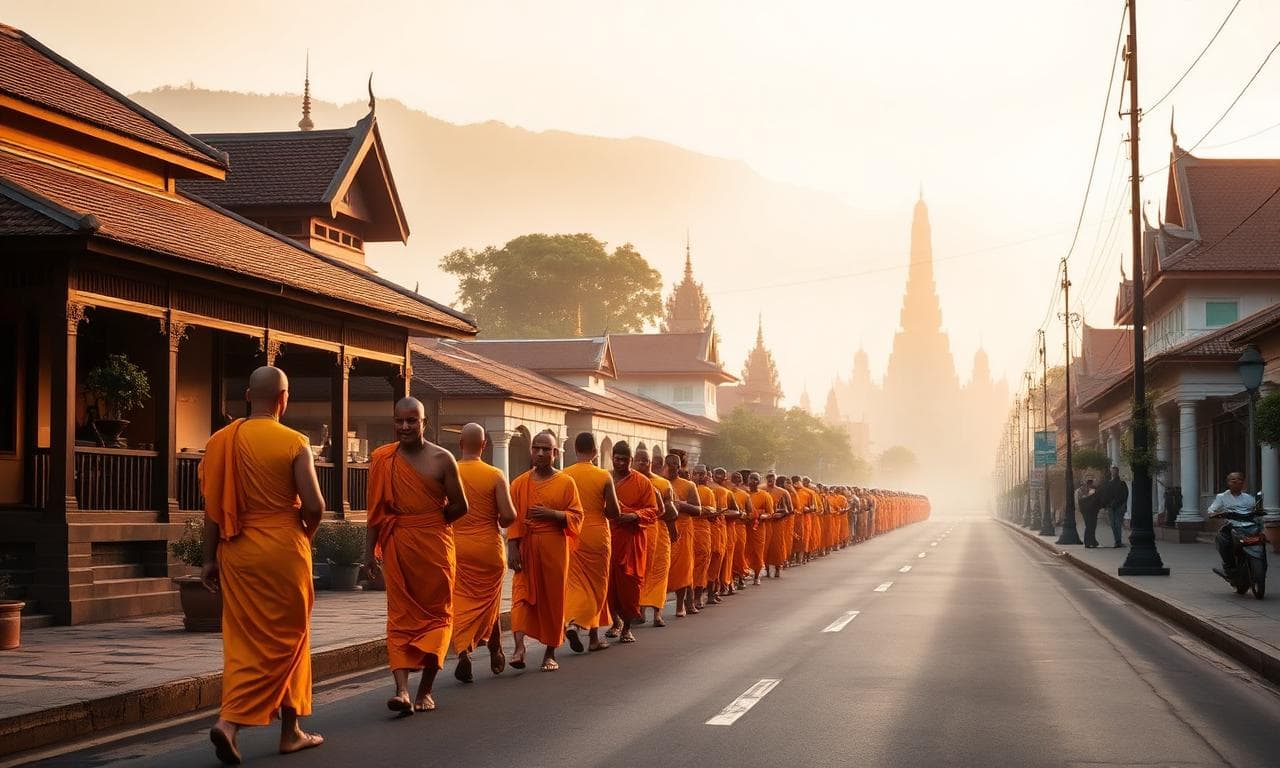
Wake before dawn for the daily Tak Bat alms-giving ceremony, when hundreds of monks walk silently through the streets to receive offerings — observe respectfully and do not use flash. Climb the 355 steps up Mount Phousi at sunset for panoramic views over the rivers and red-tiled rooftops. Tour the gilded Wat Xieng Thong, the most beautiful temple in Laos, then wander the Royal Palace Museum to see the Pha Bang Buddha. Take a half-day trip to the turquoise Kuang Si Falls, where you can swim in the lower pools and visit the bear rescue sanctuary. Cruise the Mekong to the Pak Ou Caves, packed with thousands of Buddha statues, and end the day browsing the lantern-lit Night Market on Sisavangvong Road for handmade textiles and silver.
Best Time to Visit
October to April is the dry season and the best time to visit, with cool, clear days and minimal rain. November to February is peak season — comfortable temperatures and ideal for trekking and waterfalls. March to May gets hot and hazy from agricultural burning across the region. The green season (May to September) brings heavy rain but fewer tourists and the most dramatic waterfalls.
Where to Stay
Stay in the UNESCO-protected old town on the peninsula between the Mekong and Nam Khan rivers — everything is walkable and the heritage atmosphere is unmatched.
Budget: Villa Chitdara, a charming family-run guesthouse with traditional Lao wooden architecture, a leafy garden, and an excellent location just steps from the night market.
Mid-range: Villa Maly, a converted royal residence with beautiful gardens, a pool, and elegant rooms blending Lao and French colonial design — incredible value for the experience.
Luxury: Rosewood Luang Prabang, a stunning hilltop retreat with tented villas, waterfalls on the property, and one of the most atmospheric pools in Southeast Asia.
These are affiliate links — booking through them supports Viator Modus at no extra cost to you. Same room, same price, it just helps keep the guides coming.
Getting Around
Luang Prabang International Airport has direct flights from Bangkok, Hanoi, Vientiane, Chiang Mai, and Siem Reap. The old town is entirely walkable — you can cross the peninsula in 15 minutes on foot. Bicycles can be rented from most guesthouses for a few dollars a day and are perfect for exploring. Tuk-tuks handle longer trips to Kuang Si Falls or the airport (always agree on a price first). For a slower, more scenic arrival, the two-day slow boat from Huay Xai on the Thai border down the Mekong is a classic Southeast Asia journey.
What makes Wat Xieng Thong the temple to see?
Of all the gilded wats on the peninsula, Wat Xieng Thong is the one I'd tell you not to skip. King Setthathirath built it between 1559 and 1560, back when the town itself was still called Xieng Thong — the temple's name means "Temple of the Golden City." This was the capital of Lan Xang, the kingdom whose name translates to the "Land of a Million Elephants," and for generations Wat Xieng Thong was where Lao kings were crowned. It sits right where the Nam Khan flows into the Mekong. The showpiece is the "tree of life" mosaic on the rear wall of the main hall — a flame-of-the-forest tree rendered in colored glass. Go early, before the tour groups and the midday heat.
How does the Night Market actually work?
Every evening around five, a full kilometer of Sisavangvong Road closes to traffic and fills with vendors until about ten, and I walked it more than once. Most of the sellers are Hmong and other hill-tribe women, many of them coming down from the daytime Hmong market at dusk with the same handmade goods: indigo-dyed textiles, embroidery, silverwork, paper lanterns. There are said to be more than 300 stalls. Bring Lao kip in cash, since that's what vendors take. It's the rare Southeast Asian night market that reads more as a craft fair than a tourist trap — the women are largely selling what they made themselves.
Where should you eat and drink?
For a drink I ended up at The Fat Cat, a small bar in town, over a Beerlao — really the only beer you need to order here. Beerlao has been brewed by the Lao Brewery since 1973, made with locally grown jasmine rice alongside European malt and German hops, and it owns its home market almost completely: around 99% of the beer sold in Laos. The Economist once called it "probably the most important lager in the world." For dinner, the standout was Manda de Laos, a family restaurant built around a set of lotus ponds that are themselves UNESCO-listed, a few steps off the main street. It was one of the best meals of the trip.
Can you see elephants near Luang Prabang?
Yes. We saw elephants at the Elephant Village Sanctuary in Ban Xieng Lom, a camp roughly 15 km southeast of town along the Nam Khan River. It was established in 2003 and built its herd largely from elephants that had previously been worked in the country's logging industry, and it employs people from the village itself as guides and mahouts.
Which hotels did we book?
We started at the Jasmine Luangprabang Hotel, a central spot a short walk from the Night Market that I'd happily recommend as a base — you can reach most of the peninsula on foot from there. Then I surprised her with a stay at Amantaka, and it's worth knowing what that building is: an Aman resort set inside Luang Prabang's former provincial hospital, built in 1923 and carefully restored — nine of its original buildings are UNESCO-protected — into 24 garden suites and villas. I'd worked with the Amantaka team for three months to plan a proposal there, and it could not have gone better.
Hidden Gems
Skip the touristy bamboo bridge crowds and cross the Nam Khan at sunset to Dyen Sabai restaurant on the far bank — Lao food, low cushion seating, and a free shuttle bamboo bridge in the dry season. For the best Lao coffee in town, Saffron Coffee on the Mekong sources beans from local hill-tribe farmers. Visit Ock Pop Tok, a riverside textile center where you can watch artisans weaving on traditional looms and even take a half-day dyeing or weaving class. And if you have an extra day, head out to the lesser-known Tad Sae Falls — smaller crowds than Kuang Si and you can ride an elephant-free kayak right up to the cascades.
Found this useful?
If this guide helped plan your trip to Luang Prabang, you can help fund the next one.
Buy me a coffee →