Southeast Asia
Malacca is one of Southeast Asia's most layered cities, a UNESCO-listed port town where Portuguese, Dutch, British, Chinese, and Malay influences sit on top of each other in plain sight. It's small enough to walk in a day, but the food, the architecture, and the river-town atmosphere reward anyone who slows down and stays a couple of nights.
Things to Do
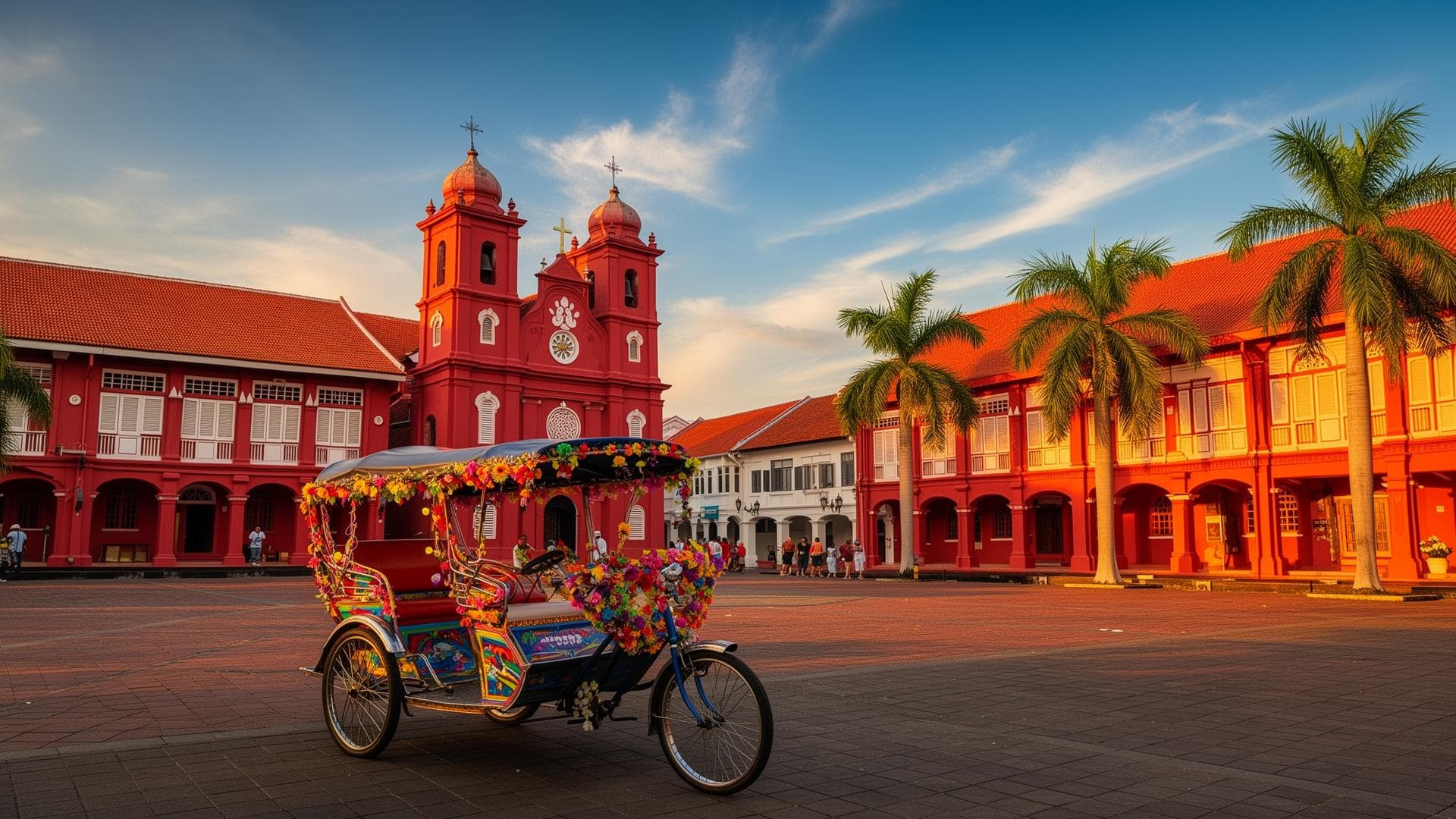
Start at the Stadthuys and Christ Church on Dutch Square, the deep red colonial buildings are the most photographed thing in town, and for good reason. Cross the bridge into Jonker Street and wander the heart of old Chinatown: shophouses, Peranakan museums, herbal shops, and tea houses that have been in the same families for generations. Climb up to the ruins of St. Paul's Church and the A Famosa fort for sunset views over the Straits. Take a slow river cruise at night when the painted murals and shophouses along the Malacca River are lit up. And block out at least one evening for the Jonker Walk Night Market (Friday–Sunday), it's touristy, but it's also where you'll eat some of the best street food of the trip.
Best Time to Visit
Year-round destination, but the sweet spot is February to April and June to August, drier weather and slightly less humid evenings. The Southwest monsoon (May–September) is generally milder than the East Coast's monsoon and rarely disrupts plans, just expect short afternoon downpours. Weekends, especially Friday to Sunday, are when Jonker Street truly comes alive with the night market, so plan at least one weekend night in town. Avoid major Malaysian public holidays if you can, Malacca is a popular domestic weekend escape and gets packed.
Where to Stay
Stay inside or right on the edge of the UNESCO old town, anywhere within a 10-minute walk of Jonker Street or the river. Restored Peranakan shophouses turned into boutique guesthouses are the signature Malacca experience: high ceilings, internal courtyards, hand-painted tiles. There are also a few well-run riverside hotels for travelers who want pool access and air-conditioned comfort without losing the location. Skip the chain hotels out near the malls, they're cheaper, but you'll spend half your day commuting back to the part you actually came for.
Budget: Ringo's Foyer Guest House, long-running backpacker favourite on Jalan Banda Kaba, with bike rentals and nightly walking tours.
Mid-range: Hotel Puri, restored Peranakan mansion on Jonker Street with an internal courtyard and original tilework intact.
Luxury: The Majestic Malacca, 1920s mansion turned heritage hotel on the riverfront, with a Peranakan-inspired spa.
These are affiliate links — booking through them supports Viator Modus at no extra cost to you. Same room, same price, it just helps keep the guides coming.
Getting Around
The historic core is small and very walkable, most of what you'll want to see is within a 15-minute radius of Dutch Square. Grab and local taxis handle anything further out, and they're cheap by international standards. The colorful, music-blasting trishaws are mostly a novelty ride for tourists, fun once, but not practical transport. From Kuala Lumpur, the easiest way in is the express bus from TBS terminal (about 2 hours) or a private transfer; the bus drops you at Melaka Sentral, from where it's a short Grab ride into the old town.
Is Malacca worth it as a day trip?
I based myself in Johor Bahru for a month and rode up to Malacca for the day, which is the honest way most people see it — a stop between bigger names rather than a destination in its own right. From Kuala Lumpur it's about a two-hour express bus into Melaka Sentral and a short Grab into the old town; from Johor Bahru or Singapore it's a longer run up the west coast, but still doable in a day. A single day is enough to walk the UNESCO core end to end. Two nights is better if you want the Jonker Street night market and a slow morning on the river, but the town rewards even a fast pass. After a long day on foot I stopped for a foot massage at Touche Therapy before the ride back — the right way to end a walking day.
Five empires in one afternoon
Malacca's whole appeal is how little distance separates its rulers. The Portuguese took the city in 1511 under Afonso de Albuquerque and threw up the fortress of A Famosa the year after; what survives today is a single gate, the Porta de Santiago, one of the oldest pieces of European architecture left standing in Southeast Asia. A few minutes away, the Dutch left the Stadthuys, built in 1650 and reckoned the oldest surviving Dutch building in the region — modeled on the town hall of Hoorn back in the Netherlands and painted the deep oxblood red that now colors the whole square. Down on the river, the Maritime Museum (Muzium Samudera) fills a full-size replica of the Flor de la Mar, the Portuguese carrack that went down in the Straits in 1511 with a hold of plundered treasure that has never been recovered. I worked through all three in an afternoon — a Portuguese fort, a Dutch town hall, and a sunken Portuguese galleon — which is about the closest thing to time travel a town this small can offer.
I also came away with a better souvenir than a fridge magnet. At Joson Numismatic Collection, a coin and antique shop on Heeren Street, I bought a Dutch duit — the small copper coin the VOC minted in enormous quantities to run its colonies, and the everyday money of the company that controlled this port for a century and a half. The duit circulated so widely across the Malay Archipelago that the word was absorbed into Malay, where duit still means "money" today. Malacca's coin and antique shops are the best place in town for a souvenir with real history in it.
Hidden Gems
Walk away from Jonker Street into the quieter Heeren Street (Jalan Tun Tan Cheng Lock), it's lined with some of the best-preserved Peranakan townhouses in the city and almost no crowds. The Baba & Nyonya Heritage Museum here is small but one of the most rewarding museums in Malaysia. For food, skip the obvious chicken rice ball spots on the main drag and find the older Hainanese coffee shops in the back lanes, same dish, half the price, locals only. And for sunset, instead of fighting for space on St. Paul's Hill, walk out to the Portuguese Settlement on the coast for grilled seafood, sea breeze, and a glimpse of the small Kristang community whose ancestors arrived here over 500 years ago.
Malacca sits an easy bus ride from the capital, so read next: my guide to Kuala Lumpur, and, further south on the way to Singapore, Johor Bahru.